
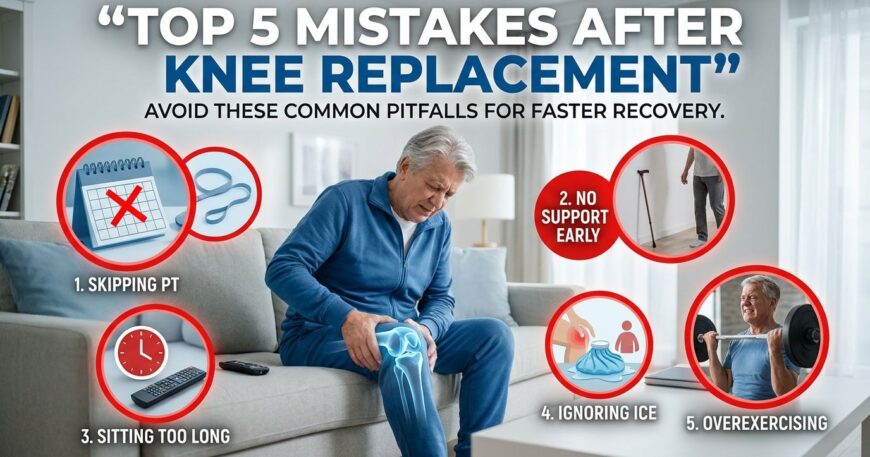
Top 5 Mistakes After Knee Replacement That Slow Down Your Recovery

People walk out of knee replacement surgery thinking the hard part is over. It is not. What happens in the weeks after surgery matters just as much as the procedure itself. The top 5 mistakes after knee replacement are things patients do every single day without realizing the damage they are causing.
Quitting Physical Therapy the Moment You Feel Better
Feeling less pain does not mean your knee is healed. That is where most people go wrong. They have a few good days, movement feels easier, and suddenly therapy feels unnecessary. So they stop going.
Here is the problem. The muscles around your knee are still recovering. The joint needs guided movement to build strength properly. Without finishing therapy, stiffness creeps back in. Patients who quit early often struggle with basic things like bending the knee fully or walking without a slight limp months later. It is a quiet setback that most people do not connect back to the decision they made in week three.
Doing Too Much Because One Day Felt Good
One good day does not mean you are ready to clean the house, walk around the mall, or stop using your walker. But that is exactly what happens. Someone wakes up feeling great, gets a burst of energy, and overdoes it completely.
By evening the knee is swollen and throbbing. The next two or three days are spent recovering from that one afternoon. This cycle repeats and the overall timeline gets pushed back each time. Your body is doing a lot of internal work that has nothing to do with how you feel on the surface. A structured activity plan from your surgeon exists for this exact reason.
Getting Pain Management Wrong
Two types of patients struggle here. The first refuses all medication because they do not want to feel dependent on it. The second takes it randomly with no real schedule. Both approaches backfire.
When pain goes unmanaged, doing your exercises becomes nearly impossible. You guard the knee, move less, and the joint stiffens. On the flip side, taking medication only when pain becomes unbearable means you are always playing catch up. A consistent schedule in the early weeks keeps pain at a manageable level so movement stays possible. That movement is what drives your recovery forward.
Not Paying Attention to How You Sleep
Nobody talks about this one enough. Sleep is when your body actually repairs itself and most knee replacement patients are sleeping terribly without realizing how much it costs them.
Waking up stiff every morning is not just annoying. It signals that overnight the knee was under stress or in a poor position. Some patients sleep with the leg hanging off the bed or put direct pressure on the surgical site without thinking about it. The compounding effect of bad sleep night after night slows tissue healing and leaves you more fatigued during the day when you need energy for therapy and movement.
Pulling Away From People During Recovery
Recovery at home can get lonely fast. You are not working. You are not driving. Simple tasks require help. That frustration builds and a lot of patients just go quiet. They stop reaching out, stop talking about how they are feeling, and try to push through alone.
What actually happens is their motivation drops. They skip exercises. They attend fewer follow up appointments. Mental state has a direct and measurable impact on physical recovery and this connection gets ignored far too often. Staying in contact with family, friends, or even an online group of people going through the same thing keeps you accountable and mentally in the game.
The Window Where Your Decisions Actually Matter
The first three months after surgery are where everything is decided. Tissue is forming. The joint is adapting. Movement habits are being built or broken. The top 5 mistakes after knee replacement all happen inside this window and their effects often last well beyond it.
Most patients do not realize until much later that a choice made in week two shaped how their knee works in year two. If you are currently in recovery, the goal is simple. Do not rush it. Do not give up on it. Show up for your therapy, follow your plan, sleep well, and let the people around you help. The patience you put in right now is what your knee gives back to you later.
