
Will a Nebulizer Help with Cough? Here Is the Honest Answer

Short answer: yes, but not for every cough. If your cough is tied to something happening inside your airways, like asthma, bronchitis, or COPD, a nebulizer can genuinely make a difference. It pushes medicated mist directly into your lungs, which is something no syrup or tablet can actually do. Devices like Omron have made this kind of therapy accessible at home. But if your cough is just from a cold or something unrelated to your lungs, do not expect miracles from one.
The Problem with Swallowing Cough Medicine
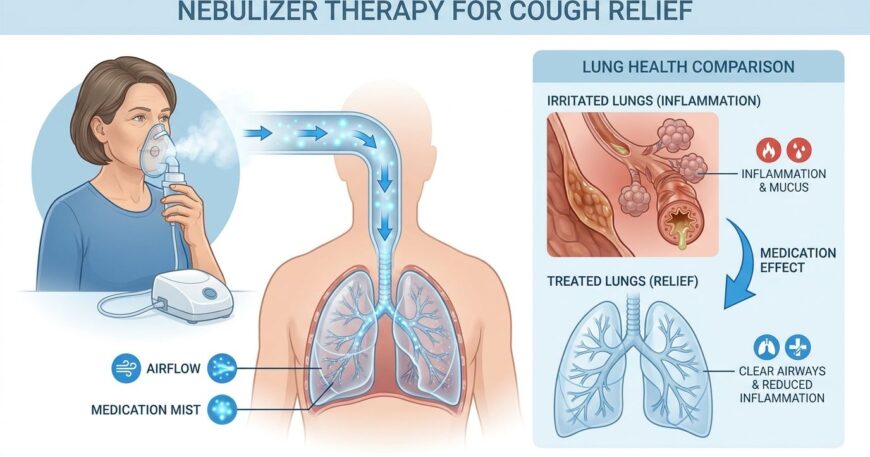
Here is something worth thinking about. When you take a cough syrup or tablet, it goes through your stomach first. Then your liver processes it. By the time it finally reaches your airways, a significant chunk of its effectiveness is already lost. A nebulizer skips all of that. The medication turns into a fine mist and goes straight into your bronchial tubes when you breathe it in. That is why people in the middle of an asthma attack get relief within minutes from a nebulizer, while oral medications can take an hour or longer to kick in. The route matters just as much as the medicine itself.
Wet Cough vs Dry Cough: They Need Different Things
Not all coughs work the same way and honestly this is where a lot of people go wrong. A wet cough is usually mucus that has built up inside your airways and your body is trying to push it out. Nebulized saline works really well here because it softens that mucus and makes it easier to actually clear. A dry cough is a different beast. That tight, scratchy feeling usually means your airways are constricted or inflamed. That is where albuterol, a fast-acting bronchodilator, comes in. It relaxes the muscles around your airways and opens them up. Using the wrong treatment for the wrong cough type is a common mistake and it is why some people say nebulizers did nothing for them.
Saline is More Powerful Than It Gets Credit For
People hear saline and think it is basically just salt water, so how much can it really do. Quite a lot, actually. When you nebulize sterile saline, it coats the inside of your airways with moisture. That moisture calms down the dry, irritated lining that keeps sending cough signals to your brain. It also starts breaking apart thick mucus sitting in your chest. For children and elderly patients, doctors often start with saline before moving to anything stronger. It carries almost no side effect risk and does not require a prescription in most places. Simple, yes. Useless, no.
What Is Physically Happening During a Session
A session usually runs about 10 to 15 minutes. You breathe normally through a mask or mouthpiece while the machine produces a steady mist. That mist travels past your throat and deposits inside the smaller airways deep in your lungs, which is exactly where the trouble usually lives. Swollen airways start to calm down. Mucus starts to loosen. Most people notice a shift during or right after the session. The cough that was tight and dry starts feeling looser. Or it just comes less frequently. That physical shift is the medication working exactly where it needs to.
When a Nebulizer Will Not Fix Your Cough
This part needs to be said clearly. A nebulizer treats your airways. It does not treat your whole body. If your cough is actually coming from acid reflux, or a bacterial infection that needs antibiotics, or chronic sinus drainage, a nebulizer is not going to fix it. You might feel slightly better temporarily because your airways get some moisture and relief. But the actual cause keeps running in the background. This is exactly why figuring out what is driving your cough matters before reaching for any treatment, nebulizer included. Will a nebulizer help with cough caused by reflux? No. Will it help with one caused by asthma? Absolutely.
Using It Once Is Not Enough for Chronic Conditions
A lot of people use their nebulizer during a flare-up, feel better, and then put it away. That makes sense on the surface. But for chronic lung conditions, one session does not reset your airways. The inflammation that makes them reactive in the first place does not just disappear. Regular use keeps the lining of your airways hydrated and reduces the baseline irritation that causes frequent coughing. People who skip sessions during good stretches often find their next episode hits harder than the last. Staying consistent, even when you feel fine, is what actually builds longer periods of relief.
What Parents Should Know About Kids and Nebulizers
Children’s airways are physically narrower than adults. So even a small amount of swelling or mucus creates more breathing difficulty for them than it would for a grown adult. A cough in a child that sticks around beyond a few days, especially one with any wheezing or labored breathing at night, often points to lower airway involvement. Nebulized saline or a doctor-prescribed bronchodilator delivered through a pediatric mask can bring real overnight relief. One important note: children’s dosing is different from adult dosing, so always follow a pediatrician’s guidance rather than adjusting based on adult instructions.
