
What Is an ATC in Healthcare?

In healthcare, ATC can mean different things depending on the context. It most often refers to one of the following:
-
Anatomical Therapeutic Chemical (ATC) classification system – A World Health Organization (WHO) drug coding system. It groups medicines by the part of the body they act on and how they work.
-
Antibody-Toxin Conjugate (ATC) – A form of targeted cancer therapy where a toxin is linked to an antibody that seeks out tumor cells.
-
Around-the-Clock (ATC) dosing – A pain-management strategy. It means giving pain medicine at regular intervals throughout the day to keep a steady level of pain control.
-
Automatic Tube Compensation (ATC) – A feature on ventilators (breathing machines) that adjusts pressure to overcome the resistance of an endotracheal tube in the airway.
Which meaning of ATC is intended depends on the setting. Below we explain each one in simple terms, with examples and key details.
Anatomical Therapeutic Chemical (ATC) Classification System
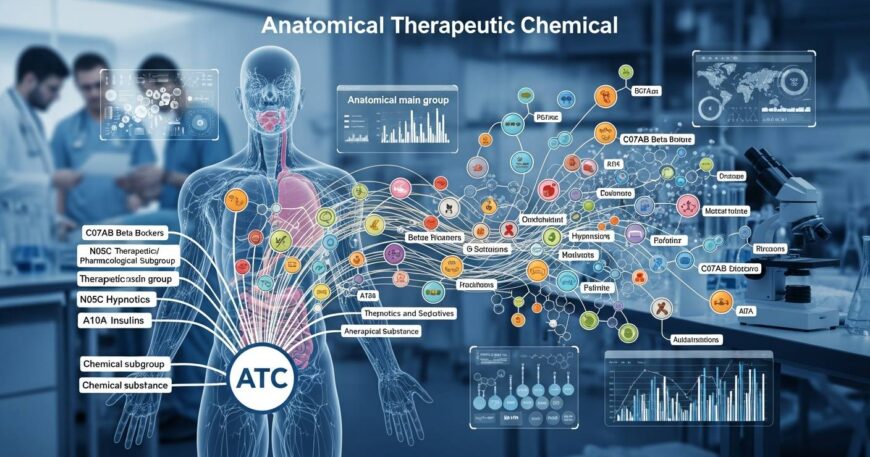
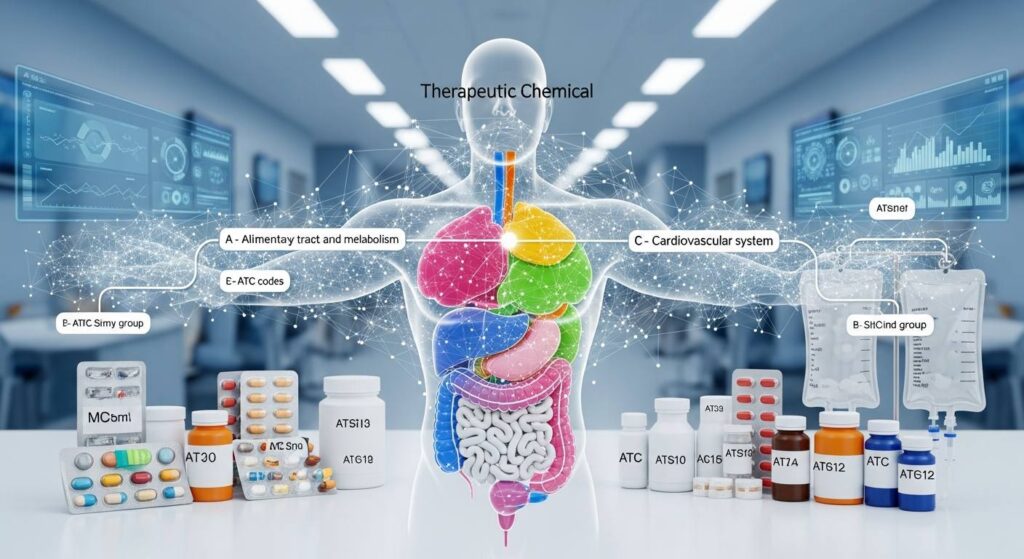
The ATC classification system is a way to organize all drugs in the world. Developed by the WHO, it sorts active drug ingredients into groups based on what part of the body they affect and how they work. For example, there are main groups labeled A through V, each standing for an anatomical system. “A” is for the Alimentary tract and metabolism, “B” for Blood and blood-forming organs, “C” for Cardiovascular system, and so on.
In the ATC system, drugs are coded in 5 levels (like a family tree) to show their group, subgroup, and chemical identity. The first level is the anatomical group (A–V). The second level is the therapeutic or pharmacological subgroup. The lower levels get more specific down to the exact chemical. For instance, the diabetes drug metformin has the code A10BA02, where “A10” means drugs for diabetes and “BA02” identifies metformin itself. This coding makes it easy to compare drug use and study medicine on a global scale.
Key points: ATC codes are widely used in medicine and research. Every plain (single) drug has one code, and codes are controlled by the WHO. The system helps doctors and scientists talk about drugs in a standard way.
Antibody–Toxin Conjugate (ATC) Therapy
An Antibody–Toxin Conjugate is an experimental kind of cancer drug. It’s a special combination where a toxin (a poisonous substance) is attached to an antibody. The antibody acts like a guided missile: it seeks out cancer cells by binding to a specific marker on the tumor. Once the antibody carries the toxin to the cancer cell, the toxin is released to kill or weaken that cell.
This approach is related to antibody–drug conjugates (ADCs), which are already used in cancer treatment. ADCs carry chemotherapy drugs into tumors. ATCs work similarly, but they may use different toxins, like bacterial toxins, instead of regular chemo. For example, MD Anderson Cancer Center researchers built an ATC that targets a protein called CD47 on tumor cells. When the antibody binds CD47, it delivers a bacterial toxin inside the cell. The toxin doesn’t destroy the cell on contact; instead it helps trigger the immune system to clean up the tumor. This can reduce side effects and help the body learn to fight the cancer on its own.
Key points: Antibody–Toxin Conjugates are a targeted therapy under research. They aim to hit only cancer cells and spare healthy ones by combining an antibody (for targeting) with a toxin (for killing). While still mostly experimental, ATCs are an exciting area in cancer treatment research.
Around-the-Clock (ATC) Dosing
The term Around-the-Clock (ATC) dosing refers to a way of giving medicine, especially painkillers. Instead of waiting for pain to become severe before giving a pill, doctors prescribe the medication at regular fixed times (for example, every 4 or 6 hours) throughout the day and night. This keeps the level of pain medicine in the body steady.
This is commonly used in chronic pain management, such as cancer pain or long-term conditions, where the patient has ongoing pain. For instance, if someone has constant back pain, their doctor might give an opioid pill every 6 hours around the clock, plus an extra “rescue” dose if breakthrough pain occurs. The goal is to prevent pain from peaking rather than chasing it after it spikes. As Yale University notes, healthcare providers often “use around-the-clock dosing … to prevent persistent pain and relieve breakthrough pain”.
Key points: ATC dosing means scheduled medication at set intervals, not just “as needed.” It is used when pain is continuous (for 12 or more hours each day, for example). This method provides a steady baseline of pain relief. In practice, ATC dosing might be combined with additional doses (often called “PRN” doses) for sudden flares of pain.
Automatic Tube Compensation (ATC)
Automatic Tube Compensation is a term from respiratory therapy. When a patient is on a ventilator (breathing machine) with an endotracheal tube (a tube down the throat), the tube adds resistance to breathing. ATC is a special ventilator mode that automatically adjusts the pressure to overcome the tube’s resistance.
In simpler terms, ATC makes breathing easier when you have an artificial airway. The ventilator senses the air flow through the tube and boosts the pressure during inhalation (and even uses a slight suction during exhalation) so that the patient doesn’t have to work as hard to move air. Studies show that using ATC reduces the work of breathing and makes patients more comfortable when on a ventilator. It’s often used to test if a patient can breathe without the tube (extubation trial) or to improve comfort while still on the ventilator.
Key points: ATC is a ventilator feature, not a drug or therapy like the others. It compensates for the extra breathing effort caused by the tube. Clinically, it can help wean patients off ventilators and improve breathing comfort.
Choosing the Right Meaning
When you see “ATC” in a healthcare setting, the meaning depends on the context. If you’re talking about drugs and prescriptions, ATC usually means the WHO drug classification system. If it’s in an oncology or research discussion, ATC might mean an antibody–toxin therapy. In a pain management context, ATC almost always refers to around-the-clock dosing of medication. In critical care or respiratory therapy, ATC would likely mean automatic tube compensation on a ventilator.
In summary, ATC is a flexible abbreviation in healthcare. Always look at the topic to know which ATC is meant. Regardless of the meaning, each ATC usage is about delivering care more effectively – whether it’s classifying medicines, targeting cancer cells, controlling pain, or supporting breathing.
