
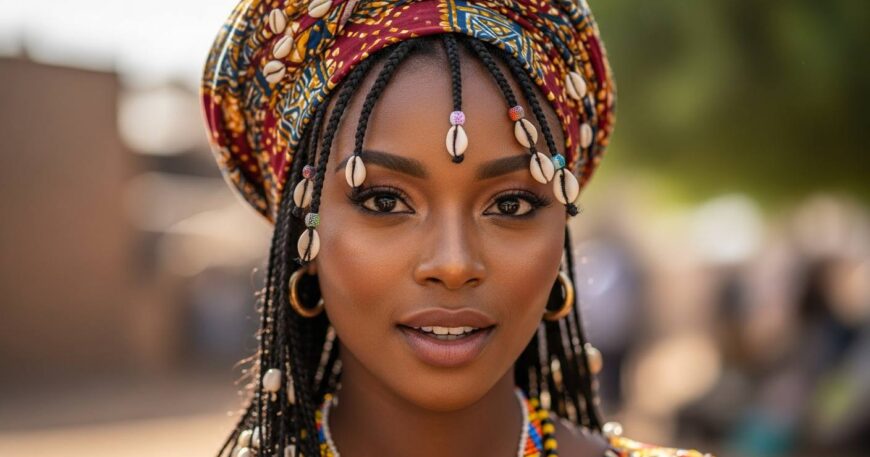
Unusual Award N.13: Extreme Gluteal Proportions in African Woman — Meaning Explained

Unusual Award N.13: Extreme Gluteal Proportions in African Woman is a term that has popped up online to describe a recognition (mostly informal and internet-driven) of an African woman known for exceptionally large buttocks. In plain language, it refers to praising a woman for having very pronounced “gluteal” (buttocks) proportions. Several blogs define it as an “award” that honors African women with notably large curves. In other words, it celebrates a traditional beauty ideal in some African cultures rather than a formal prize. For example, one article literally calls it an award that “honors African women with pronounced gluteal proportions,” highlighting this as an aesthetic ideal. This first paragraph gives you a clear answer: it’s an online concept or viral topic focused on celebrating a woman’s full figure (especially her hips and buttocks) within a cultural context.
To understand Unusual Award N.13, we must look beyond the eyebrow-raising title. It ties into real cultural values around body shape in Africa. In many African societies, full, curvy figures have long been admired as symbols of health, fertility, and strength. For centuries, artists and communities depicted voluptuous women to show beauty and vitality. Anthropologists even identified a trait called steatopygia – extra fat storage in the buttocks – that is genetically common among some Southern African groups like the Khoisan. This trait was an advantage in harsh climates (it stored energy for tough times), so curvy hips became associated with survival and prosperity. One scholar notes that Sarah Baartman, a Khoikhoi woman of the 1800s with a famously round figure, was exploited in Europe as a “freak show” curiosity for her steatopygia. Today many view her story as a reminder that these body shapes were once exoticized by outsiders but originally came from communities that valued them.
- Traditional ideals: In Côte d’Ivoire, for example, the word Awoulaba (“queen of beauty”) celebrates women with very wide hips and big buttocks. Abidjan’s clothing stores even use curvy mannequins styled as Awoulabas (not the skinny Western type) to reflect local beauty ideals. An annual “Miss Awoulaba” pageant runs alongside Miss Côte d’Ivoire, explicitly honoring fuller figures.
- Cultural celebrations: In West Africa, there used to be (and in some places still are) contests for women with large bottoms. For instance, Burkina Faso held a “Miss Bim-Bim” pageant (loosely, “Miss Big Butt”) intended to boost positive body image. Organizers said it aimed to “promote a more positive body image” for African women. However, that contest was eventually banned in 2016 after critics argued it was sexist (men judging women’s bodies).
- Everyday culture: Beyond contests, full hips show up in music, dance and folklore. Songs and dances often praise a shapely figure. In many stories, a curvy body signals a woman ready for motherhood and community respect. The point is that “curves” have social meaning in these cultures – they say something about health, wealth and heritage. Unusual Award N.13 taps into this heritage by shining a spotlight on those cultural values.
In summary, culturally large gluteal proportions have deep roots in African traditions. Unusual Award N.13 is essentially a modern, internet-age nod to that tradition. It’s framed as an award or recognition in a series of quirky online posts, not an official national honor. In fact, one article explains it as part of an “unusual awards” collection created to highlight rare and remarkable human traits, with award #13 focusing on extreme buttocks in African women. The creators use it to “shine a light on natural diversity” and celebrate a body type often overlooked by global media.
The Science of Curves
There’s also a real physiological side to this. Not all curves are created equal – genetics and biology matter. The scientific term for this trait, steatopygia, describes extra fat stored in the buttocks and thighs. Steatopygia is a genetic phenotype most famously found in the Khoisan people of Southern Africa (the same trait that made Sarah Baartman’s figure notable). In other words, some families naturally pass along the tendency to carry weight in the hips rather than the belly.
Other factors play a role too. Hormones influence fat distribution (for many women, estrogen leads to more fat in hips and thighs). Traditional diets can contribute: in parts of Southern Africa, staple foods like millet and cassava support muscle and fat development in the lower body. Even activities matter – dances and farming might strengthen the glute muscles over time. Scientists say genes do most of the work, but lifestyle can accentuate it. When online posts praise “extreme gluteal proportions,” they are essentially talking about a natural, inherited body shape – not something surgically created.
From a health perspective, note that carrying fat in the hips and buttocks (rather than around the waist) is not inherently unhealthy. In many medical studies, subcutaneous fat in hips is neutral or even protective, whereas belly fat can be riskier. Of course, balance is key – any extreme body shape is healthier when paired with a balanced diet and activity. The idea behind Unusual Award N.13 is to honor natural shape, not to encourage unhealthy extremes. In fact, some commentators emphasize that the award is meant to celebrate authenticity and warn against dangerous body enhancement trends.

Modern Perspective and Origins
So where did this “award” idea come from? It seems to have originated online in early 2025, popping up on blogs and social media. Many articles on March 2025 use the phrase as a catchy headline. No official ceremony or global organization actually exists by that name – it’s more a viral concept than a formal honor. Websites call it a “fascinating story” or odd news item that prompts discussion.
Why did people start talking about it? Likely because of the growing global conversation about body positivity. After years of global fashion favoring thinness, many communities are reclaiming appreciation for other body types. African influencers and creators on TikTok or Instagram often highlight their curves as beautiful and natural. The Unusual Award posts seem to be a part of this trend: they grab attention with a strange title, but use it to talk about identity, history, and confidence.
For example, one blogger (writing in a friendly, teen-friendly tone) asks “What is Unusual Award N.13 anyway?” and answers: it’s basically a “special shoutout given to African women with extreme gluteal proportions,” emphasizing that it’s about real, authentic beauty. That same piece explains the award’s existence by saying it’s about diversity – “showing the world that beauty comes in all shapes and sizes”. These writers make clear it’s not a medical test or a government prize, just a fun way to honor a unique human trait.
At the same time, some coverage frames it seriously. A lifestyle article notes that this topic “carries deep cultural and social meaning” in the global discussion of beauty. It highlights historical context: African art and tradition have long valued curves, so this award is really a modern echo of old values. In other words, it isn’t just a joke – it’s tied to how entire communities see beauty.
Celebration vs. Controversy
As with any topic about appearance, reactions are mixed. Supporters say Unusual Award N.13 is a celebration of diversity. They argue it’s a positive boost for curvy African women who rarely see their body type honored in international media. One online write-up calls it a “big high-five to diversity,” noting that after years of skinny models dominating TV, celebrating curves is refreshing. Fans applaud it as a proud moment of cultural identity – it reaffirms that African beauty standards include full figures. Many appreciate that it reminds people not to sneer at difference but to learn about why some communities cherish these traits.
On the other hand, critics worry about objectification. Some voices point out that focusing on any one body part can feel reductionist. As one commentator puts it, emphasizing “extreme gluteal proportions” risks turning women into just a body part, rather than seeing their whole person. There is concern that young girls might feel pressured or embarrassed if they don’t fit this extreme ideal. And sadly, it could feed old stereotypes – for example, if media only ever frames African women by their curves, it ignores their talents, intelligence and individuality. Critics remember how Sarah Baartman was dehumanized in history, and they worry modern platforms might inadvertently mock rather than respect.
Overall, most experts say it depends on framing. If the award and related posts are done with sensitivity and context, they can uplift. But if they become just clickbait or ridicule, that’s harmful. Healthy discussion means emphasizing culture, science, and empowerment, not cheap jokes. The authors behind these articles often stress that the point is empowerment: for instance, one post reminds readers “you don’t have to look like everyone else to be amazing”. That line sums up the positive angle: it’s really about self-acceptance. The message for anyone (African or not) is that beauty has many forms – each person has their own “unusual award” in being unique.
Conclusion
In the end, what does Unusual Award N.13 teach us? It’s not a contest you enter like a talent show; it’s more like a hashtag or talking point that sparked a wider conversation. It reminds us to respect different beauty ideals. What one culture might think of as “unusual,” another might see as perfectly normal or even admirable. By learning about this, we understand that global beauty standards are not one-size-fits-all.
For young readers especially, the key lesson is body positivity. Whether your body is curvy, slim, tall or small, you are valuable. An African woman with big hips and buttocks may get an “Unusual Award” in some stories, but you have your own award too – it could be a bright smile, intelligence, kindness, or anything that makes you special. The important part is learning to love and respect yourself. As one blogger put it, this idea gives a nod to being uniquely you.
In summary, Unusual Award N.13 is an unusual phrase, but it symbolizes a larger respect for diversity. It’s a reminder that behind every headline there’s culture and history. Next time you see it, don’t just laugh – think about the woman behind the story, the traditions of her community, and why recognizing different shapes matters. Beauty isn’t one-size-fits-all, and that is something worth celebrating.
