

Understanding the Health Triangle

The health triangle is a simple model showing that total well-being depends on three equally important parts: physical health, mental/emotional health, and social health. When all three sides are strong, you live a balanced, healthy life. In fact, the World Health Organization defines health as “a state of complete physical, mental and social well-being”, not just the absence of illness. The triangle reminds us that neglecting one side (for example, focusing only on exercise while ignoring stress or friends) can make the whole system shaky. In other words, this model helps you see which areas of your life need more attention so you can feel your best.
The Three Pillars of the Health Triangle
Each side (or pillar) of the health triangle represents one dimension of well-being. Think of it like a pyramid chart or cycle where all three parts support each other:
- Physical health: Your body’s condition and how well it functions day-to-day. This includes your diet, exercise, sleep, and hygiene. For example, eating nutritious meals and moving regularly helps your body stay strong and resist illness. Good physical health means having energy, strength, and fewer health problems.
- Mental (emotional) health: Your thoughts, feelings, and ability to handle stress. This covers things like maintaining a positive outlook, managing anxiety or depression, and being resilient in tough times. In the health triangle, it refers to your emotional and psychological well-being – balancing both positive and negative emotions and coping with life’s challenges. When mental health is strong, you generally have clear thinking, confidence, and better focus.
- Social health: Your relationships and sense of connection with others. This includes having supportive friendships, communicating well, and feeling a sense of belonging. Humans are social by nature, so having friends or community to rely on makes life easier and happier. In fact, research shows that strong social support is linked to better mental and physical health overall. Good social health means you have people you trust, feel valued by others, and spend quality time with loved ones or groups.
Why Balance Matters
The three sides of the health triangle are interconnected, so an imbalance can cause problems. Think of the triangle as an actual shape: if one side is much shorter or weaker, the whole triangle deforms. For example, if you focus only on physical fitness but neglect your social life, you might feel lonely or stressed, and that stress could start to affect your body (causing fatigue or health issues). Likewise, prolonged mental stress (like worrying or sadness) often shows up physically – people under constant stress can feel run-down or get sick more easily. In a balanced health triangle, all sides are about the same length. If you notice one side shrinking (for instance, you’ve stopped socializing or lost your motivation to stay active), it’s a sign to pay more attention there.
Tips for a Balanced Health Triangle
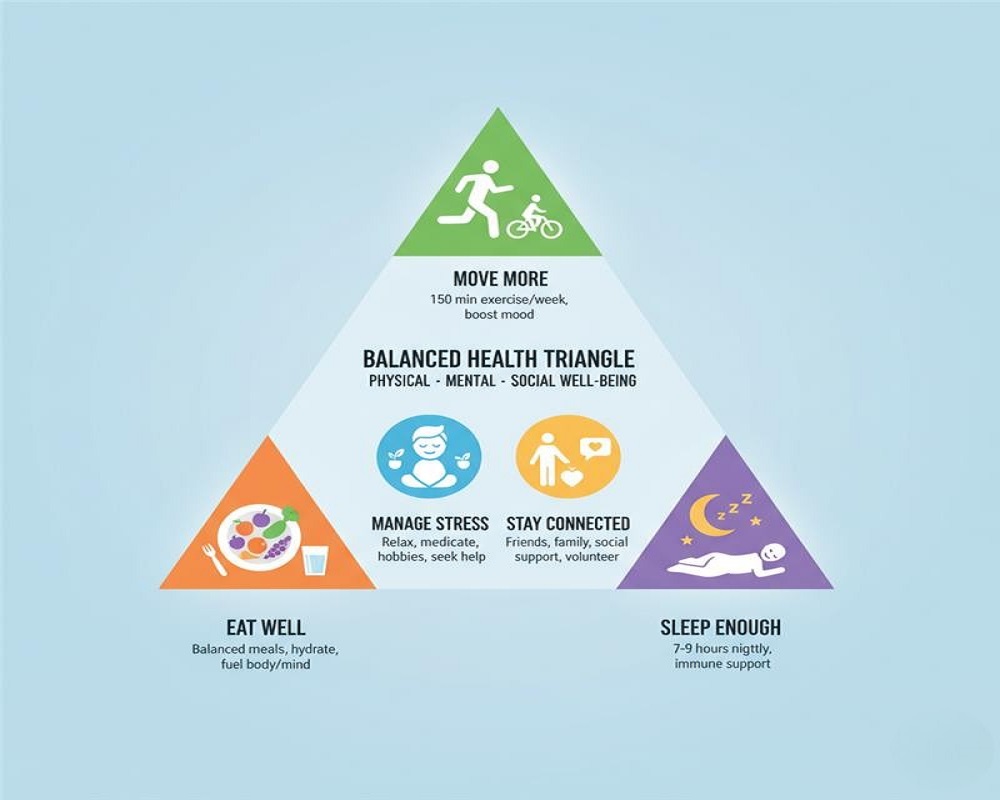
To strengthen each side of your triangle, try these practical steps:
- Move more: Aim for at least 150 minutes of moderate exercise per week (about 30 minutes on most days). This can be walking, jogging, cycling, or any activity you enjoy. Exercise not only keeps your body fit but also boosts your mood by releasing endorphins.
- Eat well: Choose balanced meals with plenty of fruits, vegetables, whole grains, and lean protein. Good nutrition fuels both body and mind. Drink enough water throughout the day to stay hydrated. These habits strengthen your physical side and give you energy.
- Sleep enough: Most adults need about 7–9 hours of sleep per night. A regular sleep schedule helps your immune system, memory, and mood. Try to go to bed and wake up at similar times each day. Quality sleep is like a reset button for both body and mind.
- Manage stress: Practice relaxation techniques such as deep breathing, meditation, or yoga. Even taking short breaks to stretch or walk can clear your head. Research shows mindfulness and meditation can significantly reduce anxiety and depression. Also consider hobbies that relax you (like reading, drawing, or music) and reach out for professional help or counseling if you need support with intense emotions.
- Stay connected: Make time for friends and family. Join clubs, sports teams, or volunteer groups to meet people. Having social support is vital – studies find that people with strong relationships have better overall health. In fact, helping others by volunteering can improve your own mood and reduce stress. Regularly checking in with loved ones (even a short call or chat) can keep your social side strong.
Frequently Asked Questions
What are the three sides of the Health Triangle?
They are Physical, Mental (emotional), and Social Physical health means caring for your body (nutrition, exercise, sleep); mental health means caring for your mind and feelings (stress, emotions, mindset); and social health means caring for your relationships. This follows the WHO definition of health, which includes physical, mental, and social well-being.
Why is social health important in the Health Triangle?
Social health (connections with others) is a key part of well-being. People with strong social support tend to have better mental and physical health. Feeling connected and valued by friends, family, or community helps reduce stress and improve happiness. In other words, supportive relationships help balance the triangle.
How can I tell if my Health Triangle is balanced?
A balanced triangle means you give attention to all three areas. One way to check is to imagine drawing your own triangle: if the points for physical, mental, and social health form an equilateral triangle, you’re well balanced. If one side is much shorter (for example, you work out a lot but never relax or socialize), your triangle is off-kilter. Balanced individuals usually feel healthy in their body, calm and confident in their mind, and fulfilled in their relationships.
What happens if one side of the triangle is weak?
If one side is neglected, it often affects the others. For example, constant stress (weak mental health) can make you feel tired and even lead to physical illness. Or if you ignore social health (feeling isolated), you might become anxious or depressed, which can harm your physical well-being. In the triangle analogy, a weak side makes the structure unstable, so it’s important to strengthen the weaker side to keep everything stable.
How do I improve a weak side of my Health Triangle?
Start with small, practical steps for that area. If your physical health is lagging, add short workouts or walks into your routine – even 10-minute activities count. Aim for the 150-minute weekly goal by splitting it into manageable sessions. For mental health, try stress-relief activities like deep breathing, meditation, or keeping a gratitude journal – these practices have been shown to reduce anxiety. If social health needs work, reach out to one friend or family member today, or join a local club or volunteer project. Even casual social activities (a phone call, a coffee with a neighbor) can help you feel more connected. Over time, consistently strengthening each side will help your overall health triangle grow strong.
