

Signs that You Lost Your Disability Hearing

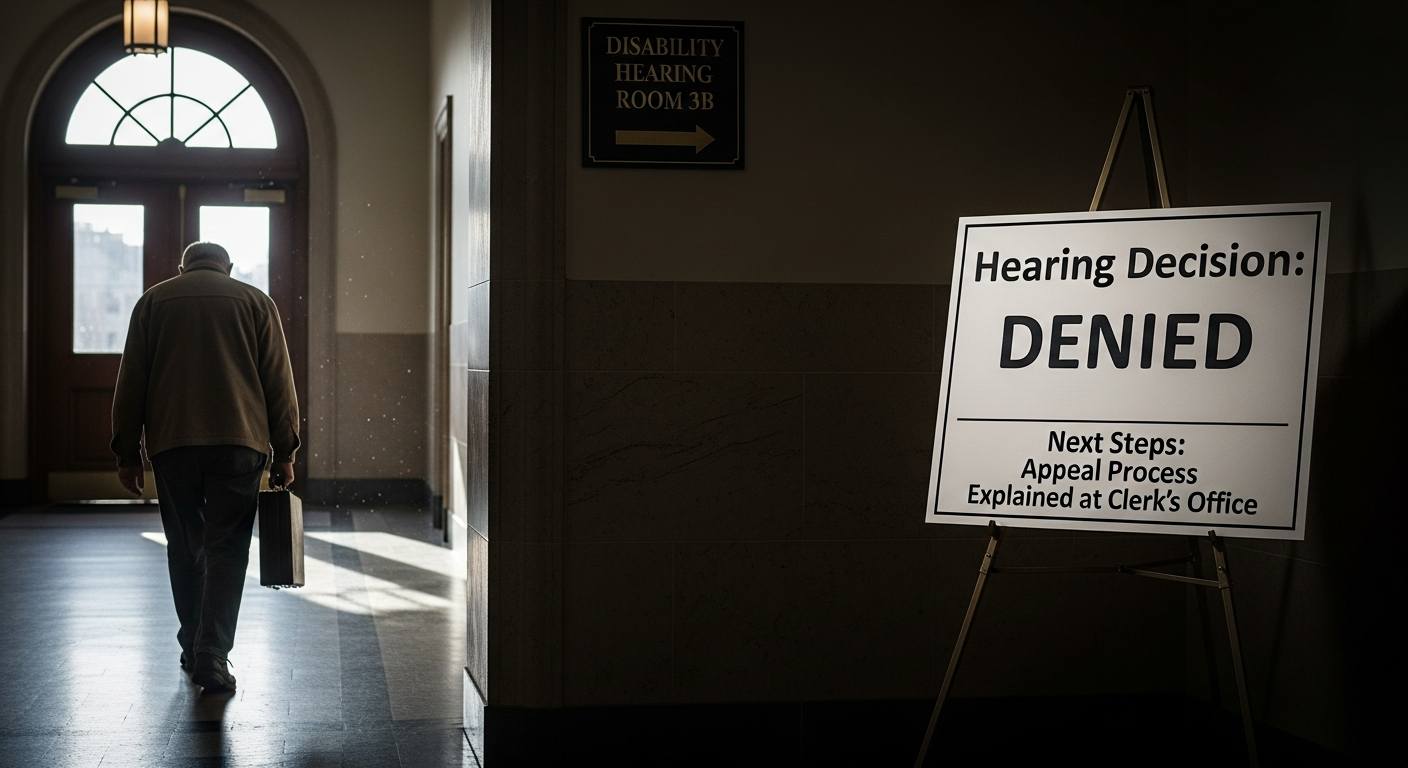
Social Security disability hearings end without an immediate decision — the judge mails out the verdict later. In the meantime, you can look for warning signals that things went poorly. For example, if the vocational expert (a specialist who testifies on what jobs you can do) names a lot of light-duty jobs for your restrictions, that’s a bad omen. Likewise, if the judge keeps grilling you on minor details (like whether you can drive or do household chores) and seems skeptical of your answers, that suggests they’re questioning your credibility. In short, the surest answer to “did I lose?” is waiting for the written denial — but clues during and right after the hearing can hint at a negative outcome.
Red Flags During the Hearing
Your live testimony and evidence build the case. Lack of strong medical records or missed treatments undercuts it. If your doctor visits and tests stop long before the hearing, the judge may find “too little evidence” that your condition is disabling. Similarly, failing to follow prescribed care (skipping medication, therapy, etc.) counts as a “bad fact” against you. In many cases, the judge will ask about these gaps. For instance, if your files show no recent records, the judge might say something like, “We have no current evidence that treatment is ongoing,” implying doubt about your disability. (It’s crucial to submit all relevant records five days before the hearing — missing updates can slow the process or hurt your credibility.)
Common warning signs during the hearing include:
-
Vocational expert identifies work you can do. When the VE names several suitable jobs (especially unskilled or “light” jobs) that match your limitations, that usually means the judge is leaning toward denial. Judges often phrase hypotheticals in order of increasing restriction; if even the final, toughest scenario still produces jobs, expect trouble.
-
Judge’s skeptical questioning. If the judge repeatedly challenges your testimony, that’s not good. For example, claiming “I can’t drive at all” might prompt the judge to ask how you got to appointments. Any inconsistency (you did drive occasionally, say) can make you seem unbelievable. Judges will also call out “bad facts” in your records. If you worked after the date you say you became disabled, or if you didn’t follow a doctor’s orders, and those issues aren’t fully explained, the judge may note them unfavorably. These questions don’t automatically doom you, but they are red flags.
-
Vague or conflicting answers from you. Being unclear about daily activities or downplaying details can hurt you. If you can’t describe how your symptoms limit you (or if your story on the stand contradicts written evidence), the judge may discount your credibility. Remember: judges and attorneys want precise answers. Being “vague” or hesitating too much is a bad sign.
-
Your own lawyer seems uneasy. Experienced disability lawyers know how hearings usually go with each judge. If your attorney privately expresses concern that the hearing isn’t going well, it’s likely because they see weak points (or a high-denial-rate judge) in your case. It doesn’t mean the verdict is written in stone, but it is a warning to pay close attention to the notes you got and what comes next.
Signs After the Hearing (Waiting for the Decision)
In the weeks after the hearing, you normally wait for the decision in the mail. By regulation, an ALJ’s written decision must be issued within about 90 days of the hearing, so if several months pass without word, that could mean trouble. Delays aren’t proof of loss, but a very long wait often suggests the judge had a hard time finding you disabled. Also watch for any post-hearing requests: if the ALJ contacts you or your attorney asking for updated medical records, new exams, or treatment updates, it usually means the evidence in the record wasn’t enough. In effect, the judge is “kicking the can” because a decision to approve isn’t obvious. While there are legitimate reasons for a consultative exam (like outdated or insufficient evidence), it often ends up used in denials.
Key clues after the hearing include:
-
Requests for more evidence. If you’re asked for a consultative exam or to turn in new doctor’s reports, it typically means the judge is missing proof of disability. In many cases, that leads to denial unless new findings are very compelling.
-
No decision after a long time. An ALJ who can’t issue a decision in the standard 90-day window may be struggling with your case. (By law, your hearing decision should come within 90 days of filing for a hearing, absent extensions.) A long delay might simply reflect backlog, but it could also hint the judge isn’t finding in your favor.
-
Your attorney hints at an unfavorable outcome. Often your lawyer has seen the judge’s notes or knows the ALJ’s usual decisions. If they begin talking about the “odds” or suggest filing an appeal or even withdrawing the case to avoid an outright denial, that’s a sign they expect a denial. In fact, sometimes lawyers discuss withdrawing a tough case so it won’t get an official “unfavorable” decision on the record (to avoid a future “presumption of nondisability” against you).
Next Steps if You Suspect a Denial
You won’t know for sure until the letter arrives, but if these signs point to a loss, don’t panic. Remember: a hearing denial isn’t the end of the line. The Social Security rules give you 60 days (from the date on the ALJ’s decision) to ask the Appeals Council to review it. Even if those first hearings all resulted in denials, you can keep going. At the Appeals Council stage, you can submit new medical evidence or explain anything the judge got wrong. In fact, experts often advise adding any new test results or doctor statements you can get before appealing.
If the Appeals Council also denies your claim, the next option is federal court. Although the process becomes longer, many cases have succeeded at the Appeals Council or in court by filling the gaps that led to the hearing denial. For now, focus on compiling stronger documentation: updated doctor reports, clarification of your daily limits, and answers to the judge’s concerns. Consult your lawyer about how best to frame an appeal. With solid evidence and help from counsel, claimants often win on appeal – particularly because legal representation makes a big difference. (Research shows people with lawyers win significantly more often than those without.)
The key is to treat the warning signs as guidance, not defeat. Use this time to “appeal smart”: gather better proof, address any inconsistencies in your record, and be ready to make your case even stronger on the next level. Ultimately, persistence pays off. Even if the ALJ didn’t grant benefits at the hearing, a well-prepared appeal can still get you the disability protection you need.
