
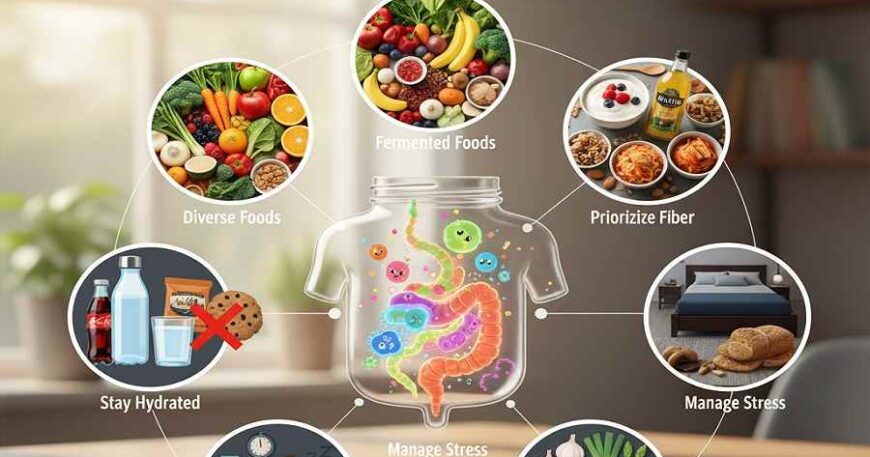
How to Improve Your Gut Microbiome Naturally? A Comprehensive Overview

Improving your gut microbiome naturally means feeding your gut’s good bacteria through a healthy diet and lifestyle. In practice, this involves eating plenty of fiber-rich plants (whole grains, vegetables, fruits, beans) and fermented foods, while cutting back on processed sugars and junk. Studies show that a high-fiber, whole-food diet alters the gut ecosystem – increasing microbial diversity and encouraging beneficial bacteria. Together with habits like regular exercise, good sleep and stress management, these changes can nurture a thriving, balanced microbiome.
Eat More Fiber and Plants
Fiber from whole grains, vegetables, fruits and legumes is the single most important fuel for healthy gut microbes. When you eat fiber, your gut bacteria ferment it into short-chain fatty acids that nourish your intestinal lining and create an environment less hospitable to harmful bugs. For example, a NIH study found that a “microbiome-enhancer” diet rich in fiber and minimally processed foods led to higher gut bacterial diversity and even caused participants to lose extra calories in their stool – essentially improving energy balance. Aim for a colorful variety of plant foods each day (oats, brown rice, spinach, broccoli, berries, etc.); this diversity of fibers supports many different species of gut bacteria and is linked to better overall gut health.
Add Fermented Foods (Probiotics)
Probiotics are live bacteria in fermented foods that can directly boost your gut flora. Yogurt with live cultures, kefir, sauerkraut, kimchi, miso, tempeh and kombucha are all rich in friendly microbes. Adding these foods regularly can seed your gut with beneficial strains. In fact, Stanford researchers reported that a diet high in fermented foods significantly increased gut microbial diversity and reduced inflammation markers in healthy adults. Likewise, health experts note that a robust microbiota “may help foster a healthy immune system and reduce damaging inflammation in the body”. To get the most benefit, choose unpasteurized products labeled “live cultures.” (Note: Some products like pickles or kimchi are fermented but may be pasteurized; look for refrigerated versions.)
Include Prebiotic Foods
Prebiotics are foods that feed your good gut bacteria. Many fiber-rich foods double as prebiotics. Good examples are garlic, onions, leeks, asparagus, bananas, oats and apples. For instance, garlic and onions contain inulin, a special fiber that beneficial microbes love to munch on. Nuts, seeds and beans (lentils, chickpeas) also count. By regularly including these in your diet, you ‘fertilize’ the gut bacteria. Health guidelines specifically highlight beans, whole grains and a range of fruits/vegetables as top prebiotic choices Eating a rainbow of plant foods each week means your gut bugs get varied nourishment, which tends to improve diversity and stability of your microbiome.
Limit Sugar and Processed Foods
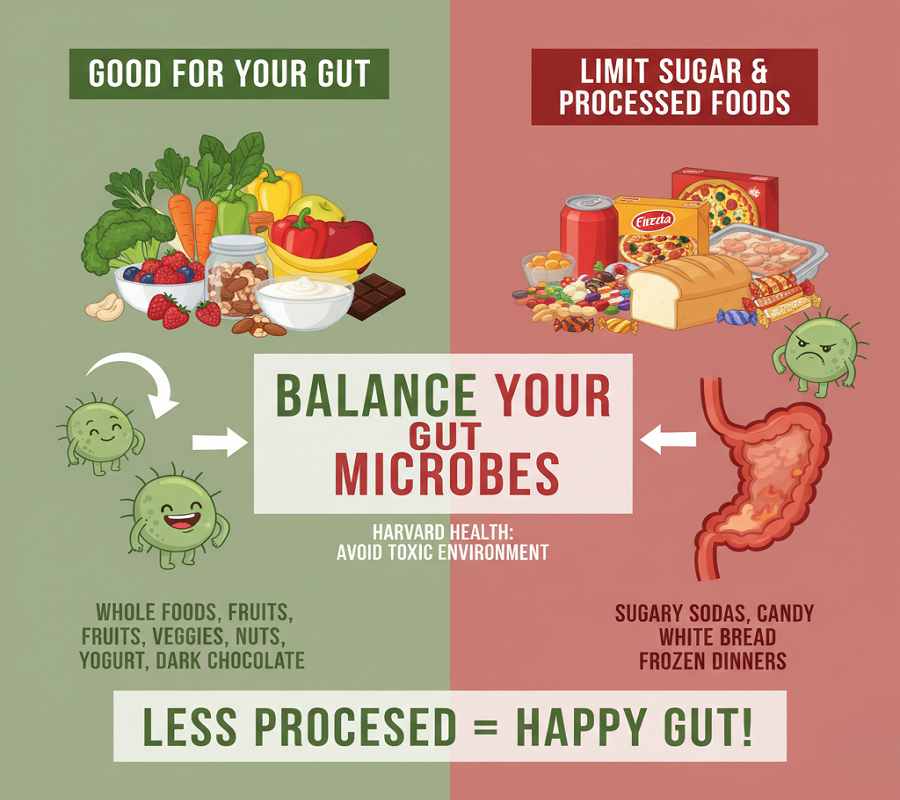
Highly processed foods, excess sugar and refined fats can starve and unbalance your gut microbes. Harvard Health warns that a typical “Western” diet heavy in sugar, fat and meat creates a toxic environment for healthy microbes. In practice, this means avoiding sugary sodas, candy, white bread and frozen dinners as much as possible. Instead of a candy bar, have an apple or a handful of berries for sweetness and fiber. Dark chocolate in moderation is a better sweet treat. Whole foods (fresh veggies, fruits, nuts and yogurt) keep blood sugar steady and your gut bugs happy. Over time, a less-processed diet tends to reduce gut inflammation and discourage harmful bacteria from overgrowing.
Stay Active, Sleep Well, and Manage Stress
Your daily habits matter too. Regular physical activity appears to boost the gut microbiome. For example, UCLA doctors note that “physical activity has been shown to greatly improve gut health.”. Exercise may help increase microbial diversity and reduce inflammation. Aim for a mix of aerobic workouts (walking, jogging, cycling) and strength training most days. Quality sleep is also important. One study found that children who slept longer at night had higher levels of beneficial Bifidobacterium in their gut, suggesting good sleep supports a healthy microbiome. Finally, chronic stress can upset gut balance (via hormones like cortisol), so practicing relaxation – meditation, yoga, or simply spending time in nature – can indirectly benefit your gut. In short, healthy lifestyle habits create a more favorable environment for your gut bacteria to thrive.
Use Antibiotics Wisely
Antibiotics can be life-saving, but they also wipe out large swaths of your gut bacteria. UCLA Health explains that antibiotics “work by wiping out any and all bacteria… which makes them…very bad for your microbiome”. This often leads to a drop in microbial diversity. So only take antibiotics when truly needed (and prescribed by a doctor). If you do need a course, it’s wise to support recovery afterward. However, note that taking probiotic pills immediately after antibiotics can sometimes delay the microbiome’s return to normal. Instead, “feed your gut” naturally: focus on a wide and varied range of prebiotic foods (vegetables, beans, whole grains, nuts, fruits) and fermented foods with live cultures. This approach helps repopulate your gut with its own unique microbial community. As UCLA Health puts it, after antibiotics there are “no shortcuts to good gut health” – it’s about gradually nourishing your gut back to balance.
Final Thoughts
Improving gut health is a gradual, holistic process. There’s no instant fix – it’s about making consistent, healthy choices. By choosing fiber-rich plants, fermented foods, and other microbiome-friendly habits day after day, you’ll feed a diverse community of gut microbes that support your digestion, immunity and even mood. As experts emphasize, “eat well, take care of yourself and be patient” – your gut will thank you in the long run.
