
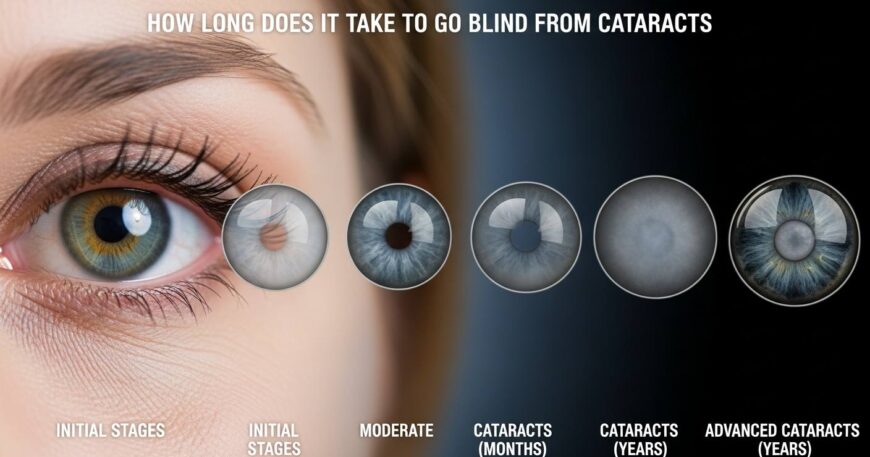
How Long Does It Take to Go Blind from Cataracts? An Ultimate Guide

Most cataracts develop very slowly, so it typically takes many years (often a decade or more) for vision to worsen to the point of legal blindness. Age-related cataracts usually advance at a glacial pace: protein clumps form gradually in the eye’s lens, first causing mild blurring and color-fading and only severely dimming vision after many years. In contrast, certain cataract types – like those from eye injury or systemic illness – can progress much faster. But thanks to modern care, total blindness is very rare. Cataract surgery (replacing the clouded lens with a clear artificial one) restores sight in almost all cases, so few people ever lose all vision from cataracts.
Understanding Cataracts
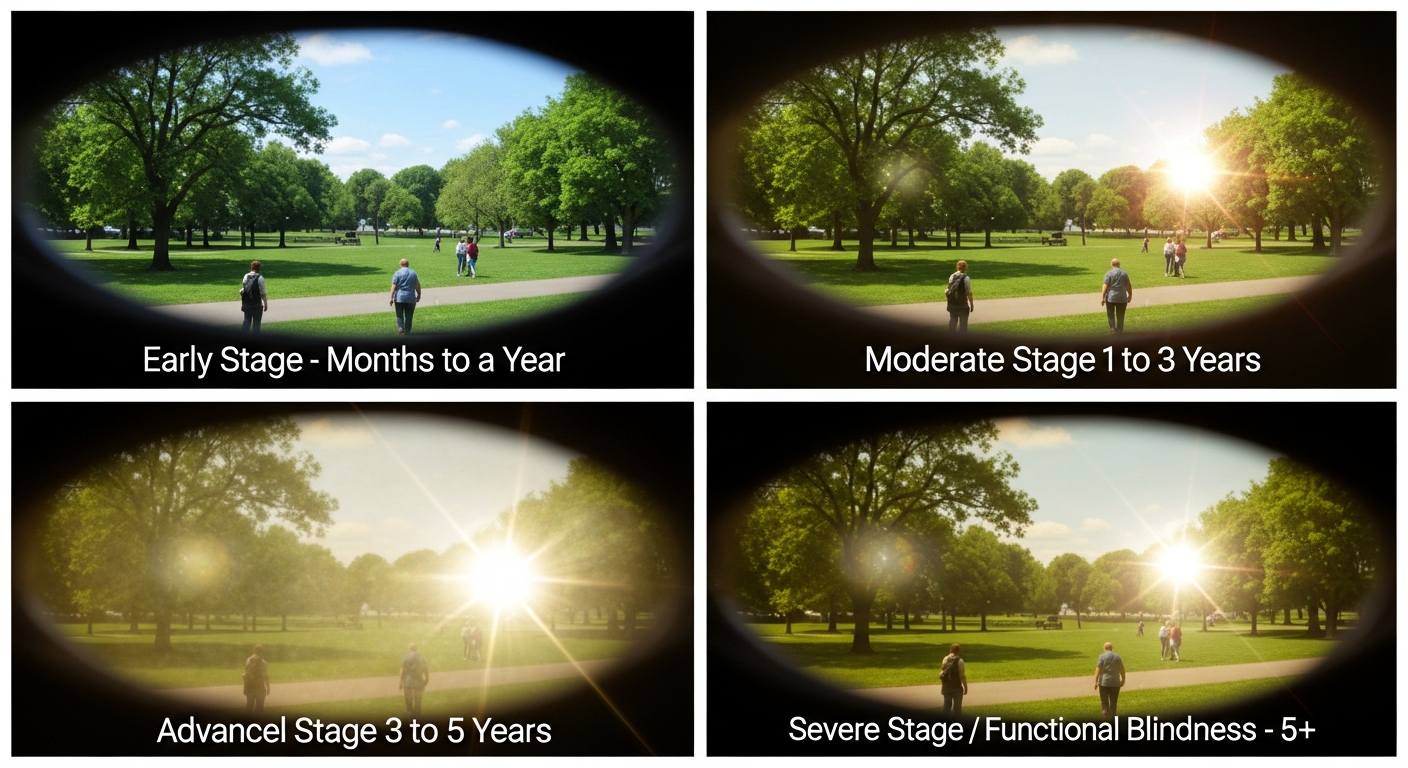
A cataract is a clouding of the eye’s natural lens (behind the iris) that blurs vision. Think of it like a foggy window: at first you may only notice slight haze or glare. By age 80, most adults have some lens cloudiness. Early cataracts often cause symptoms such as blurred or faded vision, sensitivity to light and glare, and seeing halos around bright lights. For example, colors may look “washed out” and lights (like oncoming car headlights) may bloom into halos at night. These warning signs usually start subtly and worsen slowly.
Cataracts typically progress through stages. In early (immature) stages the lens still lets through most light, so vision loss is mild. As more lens fibers clump and cloud, the cataract reaches an advanced (“brown” or “mature”) stage where vision can become very blurry or dark. The figure above shows this gradual sequence. Because the process is gradual, many people adapt to slowly worsening sight without realizing how impaired it’s become until many years have passed.
Cataract Progression: A Long Timeline
For age-related cataracts, the timeline from first signs to severe vision loss is usually measured in years or decades. Experts note that untreated age-related cataracts often take at least 10 years to reach the point of legal blindness. In fact, most people will experience cataract formation only slowly enough that they can get new glasses or surgery long before going blind. One specialist explains that “cataracts develop at different rates depending on individual factors. For some, the process can take 10–15 years from early formation to severely impaired vision”.
On the whole, expect vision to worsen gradually. Early on, you may need brighter light to read or notice colors dimming. Over several years you might begin seeing more glare and needing cataract-specific glasses. Only after many years (often 5–15 years or more, depending on your health and age) does vision become seriously limited. In other words, it’s common for age-related cataracts to exist for a decade or two before causing profound vision loss. During this time, regular eye exams allow doctors to track the progression and recommend surgery when needed.
Faster-Progressing Cataracts
Not all cataracts progress at the same rate. Posterior subcapsular cataracts (PSC) – a specific type often linked to diabetes, steroid use, or inflammation – can advance relatively quickly. A PSC forms at the back of the lens and can noticeably cloud vision within months to a few years, especially affecting reading and bright-light vision. Similarly, traumatic cataracts from an eye injury may develop in a very short time. For example, blunt or penetrating eye injuries can trigger cataracts that become dense over days or weeks. In practice, a doctor notes that cataracts caused by trauma, diabetes or certain medications “can progress much faster, sometimes causing major vision loss within months to a few years.”
So, if a cataract is due to injury or illness, don’t assume it will take decades; it might worsen in a few months or years. In contrast, purely age-related cataracts in healthy eyes usually follow the long, slow course.
Factors That Speed Cataract Development
Several factors influence how fast a cataract grows:
-
Age & Genetics: Cataracts are more common as you age (especially 60+). People in families with early cataracts may also develop them sooner.
-
Diabetes: High blood sugar can accelerate cataract formation. Diabetes is strongly linked to faster cataract progression.
-
Steroid Medications: Long-term use of corticosteroids (for asthma, arthritis, etc.) is known to speed up certain cataracts (like PSC).
-
Eye Injury or Inflammation: A past eye injury or chronic inflammation can trigger a cataract that grows rapidly.
-
UV Exposure and Smoking: Excess sunlight (UV rays) and smoking have been linked to earlier cataract development. Both factors can “accelerate the process”.
-
Other Health Conditions: Diseases like hypertension or certain metabolic disorders may also contribute.
In short, if you have diabetes, have taken steroids a long time, or had eye trauma, watch your vision carefully – your cataract might worsen faster than average. Otherwise, aging on its own tends to cause slow progression.
Preventing Severe Vision Loss (Slowing Cataracts)
While not all cataracts can be prevented, you can take steps to slow their growth and protect your vision:
-
Wear UV-blocking sunglasses whenever you are outdoors. Sunlight’s ultraviolet rays can hasten lens clouding.
-
Eat a healthy, antioxidant-rich diet. Foods like leafy greens, colorful fruits and berries support eye health.
-
Manage chronic conditions. Keep diabetes and other health issues under control, as high blood sugar can make cataracts worsen faster.
-
Avoid smoking and limit alcohol. These habits are linked to earlier cataract formation.
-
Get regular eye exams. Periodic check-ups catch cataracts early, so an eye doctor can monitor changes and recommend treatment at the right time.
Taking these steps can preserve your current vision longer. However, remember that cataracts are largely age-related, so even if you do everything right, surgery will likely be needed eventually. The key is to delay severe vision loss until surgery is convenient, not to avoid it altogether.
Cataract Surgery and Vision Restoration
The most important fact is that cataract-related blindness is almost always reversible with modern surgery. Cataract surgery is quick (about 15–30 minutes per eye) and highly effective. The cloudy lens is removed and replaced with a clear artificial lens (an intraocular lens, or IOL). Most patients notice dramatically sharper vision within days after surgery.
Because of this, no one needs to wait until total blindness. Doctors typically recommend surgery when vision impairment starts affecting daily life (driving, reading, work, etc.). In fact, even when a cataract has caused legal blindness (very low vision), surgery usually restores clear sight. As one source notes, untreated cataracts “eventually progress to the point of legal blindness… [but] this vision loss is not permanent” thanks to surgery.
Key Takeaways
In summary: Most cataracts take a long time to cause severe vision loss. For age-related cataracts, think in terms of years or decades, not months. Special cases (like diabetic or traumatic cataracts) can worsen in months to a few years, but such rapid decline is uncommon. Regular eye exams and the availability of safe, effective cataract surgery mean few people in developed countries ever go completely blind from cataracts. If you notice any gradual blurring or glare in your vision, see an eye doctor: they can track cataract growth and advise on the optimal time for surgery, preserving your vision in the process.
