
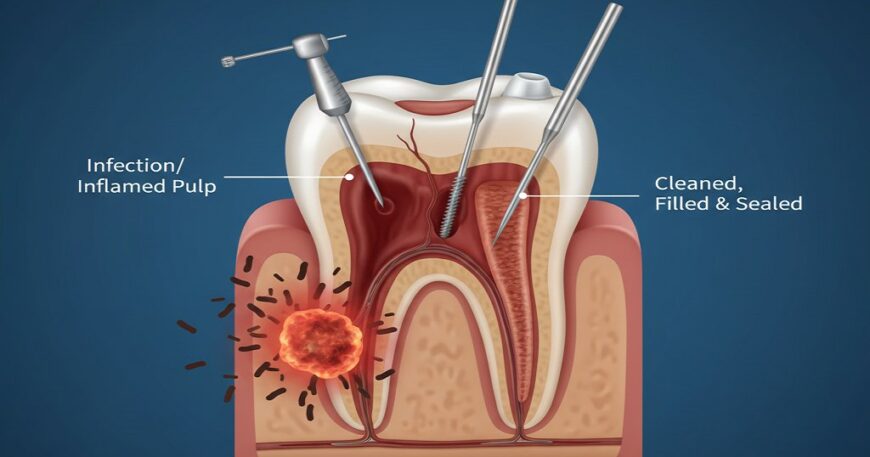
Do Root Canals Cause Health Problems? All You Need to Know

No – root canals do not cause health problems. In fact, modern dentistry finds that root canal therapy is a safe, routine treatment that removes infection from a tooth and preserves your natural smile. Decades of research have failed to show any link between root canal–treated teeth and diseases like cancer, heart disease, or immune disorders. Leading dental experts – including the American Association of Endodontists and the Canadian Cancer Society – emphasize that root canals do not increase cancer risk or trigger chronic illness. In short: root canals solve problems (tooth infections), they don’t create new ones.
Modern root canal treatment works like a deep cleaning for an infected tooth. The dentist or endodontist (a tooth‐root specialist) drills into the tooth’s pulp chamber, removes the infected nerve and tissue, disinfects the space, and then seals it with inert filling material (like rubbery gutta-percha). This process eliminates bacteria and pain – it doesn’t leave a ticking time bomb. When done under sterile, regulated protocols, a root canal stops the infection from spreading, preserving your tooth and overall health.
Why the “Root Canal Causes Disease” Story Persists
You may have heard scary claims online or from old articles – for example, that a root canal can “poison” your body or cause cancer. These ideas come mainly from a century-old theory called the focal infection theory. Around the 1920s, Dr. Weston A. Price and others suggested that bacteria trapped in treated teeth could “leak” into the bloodstream and cause all sorts of ailments (arthritis, heart disease, etc.). This was before modern scientific methods. By the 1930s and 1950s, well-designed studies thoroughly debunked those claims. In fact, by 1951 U.S. dentists had shifted back to saving infected teeth with root canals rather than automatically pulling them.
Decades of modern research have only reinforced that root canals are safe. The American Association of Endodontists explains that there is “no valid, scientific evidence linking root canals to any health problems.”. The Canadian Cancer Society similarly states flatly: “There is no evidence that root canals cause cancer.”. One large study even found that patients who had multiple root canals had lower rates of head and neck cancer than those who didn’t. In other words, maintaining healthy teeth and treating infections promptly (often with root canals) tends to keep you healthier, not sicker.
How Root Canals Protect Your Health
A root canal removes the infection inside a bad tooth. Untreated tooth infections can be dangerous: they can form abscesses (painful pockets of pus), damage jawbone, or even allow bacteria into the bloodstream (potentially leading to sepsis, a serious systemic infection). By cleaning out the decay and bacteria and then sealing the tooth, a root canal prevents these serious complications. In fact, dentists warn that avoiding a needed root canal is riskier than having one – leaving an infected tooth untreated can ultimately cost you the tooth and jeopardize your health.
Root canal-treated teeth often fare better than extracted teeth: keeping a natural tooth helps you chew, speak, and smile normally. Implants or bridges can replace missing teeth, but they require surgery and extra time. Root canal therapy, on the other hand, is usually straightforward and actually preserves the tooth’s fiber and bone support. Endodontic experts stress that saving a natural tooth is usually better for your body and bite.
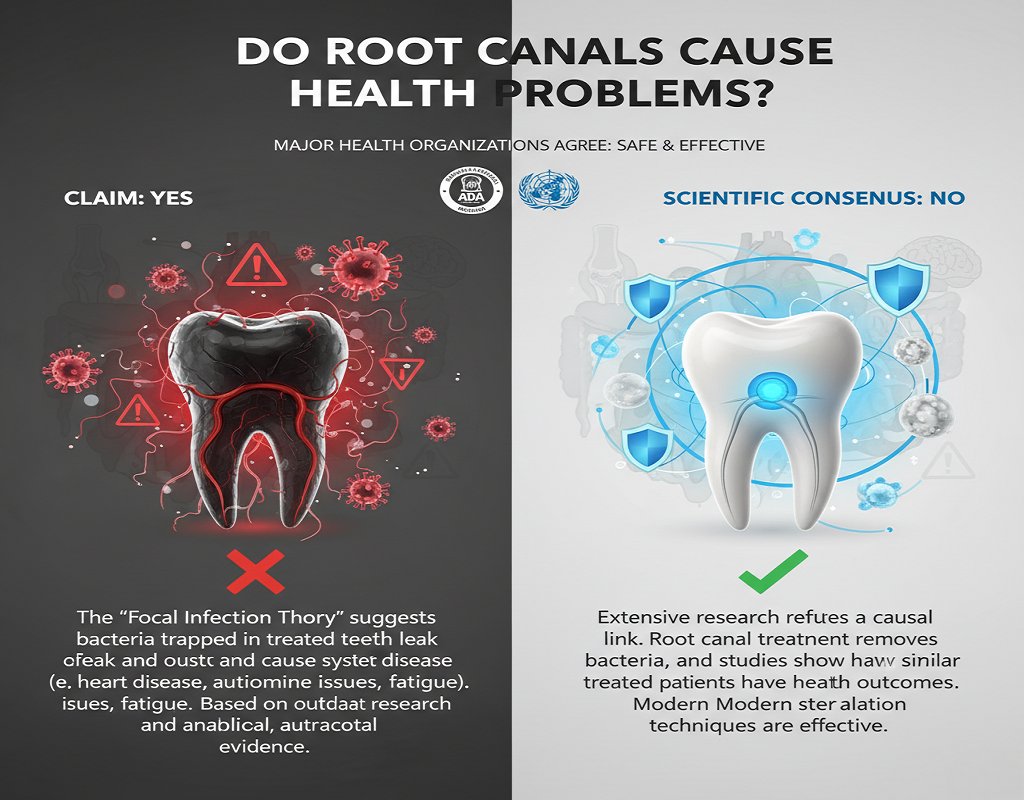
Common Myths (and the Facts)
- Myth: Root canals leave toxins or bacteria in the body. Fact: After a root canal, the canals are cleaned with strong disinfectants and then filled with inert, biocompatible material (gutta-percha). These materials are stable and sealed inside the tooth. They do not leach toxins into your body. Modern techniques (including rubber dams and fine instruments) prevent contamination. The tooth is essentially buried beneath a crown, and bacteria from the mouth cannot get into the sealed canal.
- Myth: Root canals weaken your immune system. Fact: A root canal does not “shut down” your immune system. That claim traces back to misleading 1920s research and pop documentaries, but experts say it’s baseless. The procedure simply removes infection; it doesn’t make you more susceptible to illness. In fact, by eradicating the source of infection, a root canal helps your body focus on staying healthy.
- Myth: Treated teeth become “dead” and decay inside you. Fact: After a root canal, the tooth’s nerve is gone, so you no longer feel pain in it. But the tooth itself isn’t a rotting corpse. It still has blood supply around the root and stays attached in your jaw. The root canal fills preserve the tooth’s structure. Dentists use crowns or fillings afterward to fully protect the tooth from new decay.
- Myth: You’re better off extracting the tooth. Fact: Extracting an infected tooth is a last resort. Removing a tooth can cause other teeth to shift, require bridges or implants, and involve more pain. Saving the tooth with a root canal is usually gentler and better for long-term oral health.
Throughout all these myths, the bottom line is that root canals treat disease, they do not cause it. The procedure is highly regulated: dentists and endodontists are licensed professionals who follow strict sterilization and treatment protocols. Dental boards and health authorities ensure root canals are done safely. The materials used are well-studied and proven harmless when used correctly.
What Research and Experts Say
- Cancer: A Canadian Cancer Society fact-check plainly reports, “There is no link between root canals and cancer”. Similarly, the American Association of Endodontists notes that large studies show no change in cancer risk after a root canal; in one case patients who had several root canals even showed a lower rate of head/neck cancers. In short, credible cancer experts have not found any evidence of root canal–caused cancer.
- Heart Disease & Other Illnesses: The old fear that bacteria from a tooth could cause heart problems or arthritis has also been disproven. In fact, the American Heart Association removed root canal procedures from its list of treatments requiring antibiotic premedication, reflecting confidence that treated teeth aren’t a hidden source of infection. Expert reviews conclude “no valid scientific evidence linking endodontically treated teeth and systemic disease”.
- Clinical Guidelines: Trusted dental resources (ADA, AAE, etc.) emphasize that it’s healthier to save teeth when possible. The AAE says root canals are effective and successful, and that patients should understand the tooth-repairing role of root canals. The UCSF School of Dentistry dean even points out that root canal therapy eliminates bacteria from an infected tooth, preserving the natural tooth – it doesn’t introduce new problems.
All these authoritative sources reassure patients that root canals are safe and beneficial. Any claim to the contrary is either outdated misinformation or confusion with untreated infections.
Conclusion:
Root canals do not cause health problems. They cure them. By removing tooth infections, they actually protect your body from the dangers of untreated decay. Dental experts everywhere agree – root canals are a key part of good health care. If your dentist recommends a root canal to save an infected tooth, you can feel confident that it is the right and safe choice for you.
FAQs (Common Concerns)
Do root canals cause cancer or chronic illness?
Extensive studies and expert reviews have found no evidence that root canal treatment causes cancer, heart disease, or any other chronic illnesses. In fact, treating infection helps your overall health.
What if bacteria get into my bloodstream during a root canal?
A properly done root canal actually prevents bacteria from spreading. Dentists isolate the tooth (usually with a rubber dam) and use sterile tools and antiseptics. Any tiny bacteria present are flushed out before the canal is sealed. By contrast, everyday actions like brushing or chewing can cause more bacteria to enter the blood than a treated tooth.
Are the filling materials toxic?
The common filling (gutta-percha and cement) is inert in your body. It won’t leach chemicals or damage your body. These materials have been used safely for decades.
If I skip the root canal and just pull the tooth, is that better?
Extracting an infected tooth avoids the concern of leaving anything behind, but it has its own risks. Tooth removal can lead to bone loss, shifting teeth, and extra surgeries (implants or bridges) down the line. For most people, saving a natural tooth with a root canal is healthier and less invasive in the long run.
Should I worry about anything after a root canal?
After a root canal, you should follow your dentist’s instructions for care (like avoiding chewing on that tooth until it’s fully restored). Some mild soreness for a day or two is normal. But once healed, a root-canaled tooth functions like any other. There’s no ongoing health worry – just enjoy your clean bill of oral health!
