
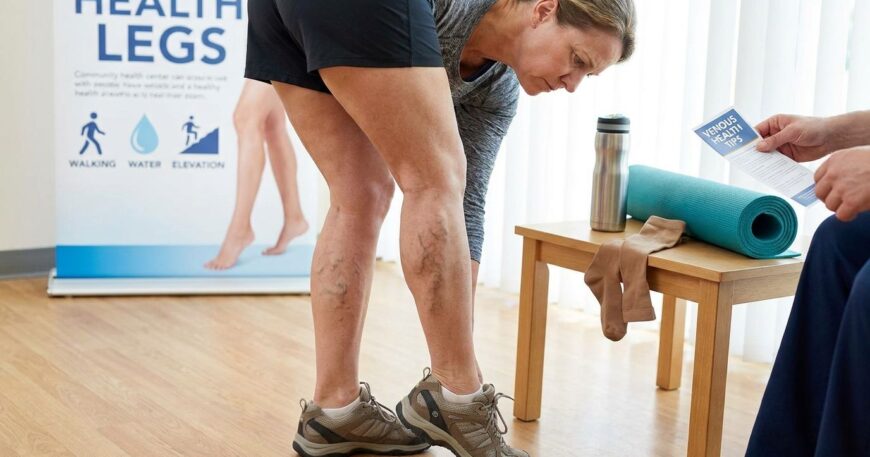
How to Prevent Varicose Veins Before They Become a Real Problem

Nobody really thinks about their veins until one day they look down and see something strange on their leg. A bluish, twisted line that was not there before. Then comes the panic and the Googling. But here is what I want you to know first: learning how to prevent varicose veins is not as difficult as most people think. Some changes in your daily routine, the way you eat, the way you move, these things genuinely make a difference. The sooner you start paying attention, the better your legs will thank you later.
What Is Actually Going On Inside Your Veins
Your leg veins, they work against gravity all day. Inside them are small valves that open and close to push blood upward toward your heart. When these valves become weak, the blood does not go up properly. It slides back and sits inside the vein. This is what makes them swell and twist and become visible under the skin. And it is not only a looks problem. If you ignore it long enough, you can get leg aches, skin changes, and sometimes even ulcers.
Some people are more likely to get this than others. If your parents had varicose veins, honestly there is a good chance you might too. Pregnancy puts pressure on the pelvic veins. Standing or sitting for many hours at work, both of these things create the same problem from two different sides. The blood just does not move the way it should.
Your Legs Were Not Made to Stay Still
Here is one thing that surprises a lot of people. Your calf muscles are actually helping your veins do their job. Each time you take a step, the calf squeezes and pushes blood upward. Doctors have a name for this, the calf muscle pump, and it does work that your heart alone cannot do.
Now when you are standing in one place for hours, or sitting without getting up, that pump mostly stops working. Blood collects in the lower leg. By evening you feel it as heaviness or swelling. Over time, months and years of this repeated pooling, the vein walls get weaker.
So honestly the most practical thing you can do is just move more. Not exercise in a big way. Walking is enough. Even if you take a short walk every hour when you are at a desk job, that alone helps. Doing ankle circles or calf raises while you are seated, these small things also count. Anything that gets the calf muscle working again on a regular basis.
Extra Weight Is Harder on Veins Than Most People Realize
When you carry extra body weight, it does not only affect your knees or your back. The weight around your belly and pelvis also presses down on the veins that bring blood back from your legs. Think of it like squeezing a water pipe from the middle. Everything below that pressure point has a harder time draining.
Even if you lose only 5 or 10 kilos, that can already take real stress off those vessels. You do not have to reach some perfect number on the scale. Just bringing the weight down a little makes things easier for your circulation.
Food choices also play a role here, maybe not in the way you would expect. Fiber matters a lot because when you get constipated and you strain during the toilet, that raises the pressure inside your abdomen and that pressure travels down into your leg veins. So eating vegetables, lentils, whole grains regularly, this keeps the digestion working and indirectly protects your veins too. Potassium-rich foods like bananas and spinach help reduce water retention in your body, and that brings down the puffiness you sometimes feel in your legs at night.
Compression Stockings Are More Useful Than They Look
Many people think these are only for old patients or for after surgery. That is really not true. Compression stockings press gently on the lower leg, tighter near the ankle and a bit looser as they go up. This graduated pressure helps the veins push blood in the right direction with less effort.
If you are pregnant, or you work standing all day, or you travel by plane for long hours, or even if varicose veins just run in your family, wearing compression socks regularly is one of the better things you can do. These days they come in normal styles too, not the ugly beige ones people imagine.
Also, putting your legs up for a while every day genuinely helps. If you lie down and lift your legs above the level of your heart, even for 15 to 20 minutes, the blood can drain back more easily. It sounds too simple to matter but the difference you feel after a long day is very real.
Some Small Habits That People Do Not Think About
Tight clothing around the waist or upper thighs can slow down how blood drains from the legs. It does not have to feel painfully tight. Even jeans or waistbands that are just a bit snug, worn every single day, can cause some trouble over time.
High heels are also worth thinking about. When you wear them, your calf muscle does almost nothing with each step. You lose that natural pumping action that helps blood move upward. Flat shoes or low heels allow the calf to work properly and keep the circulation going.
Crossing your legs when you sit is something so many people do without thinking. But it presses on the vein behind your knee and slows the flow in the lower leg. Sitting with both feet flat on the floor is the better habit, even if it takes some getting used to.
When Varicose Veins Run in Your Family
You cannot do anything about your genes. If your mother and father both had vein problems, your risk is higher no matter what you do. But that does not mean prevention is a waste of time. It just means you need to be more careful and more consistent than someone who does not have that background.
It makes sense to start wearing compression socks earlier, maybe in your 30s, rather than waiting for a problem to appear. Keeping your weight in a reasonable range, staying physically active, and going to see a vascular doctor when you first notice things like heavy legs or small spider veins, all of this puts you in a much better position.
Final Word
How to prevent varicose veins really comes down to one simple idea, keep blood moving and keep pressure off the veins. Gravity, body weight, and long hours of stillness are working against your legs every single day. But each small habit that pushes back against those things adds up over time. Walk more, eat in a way that supports digestion, wear compression socks when it makes sense, watch your clothing choices, and listen to what your legs are trying to tell you. For most people, this is genuinely enough to stay ahead of the problem.
