
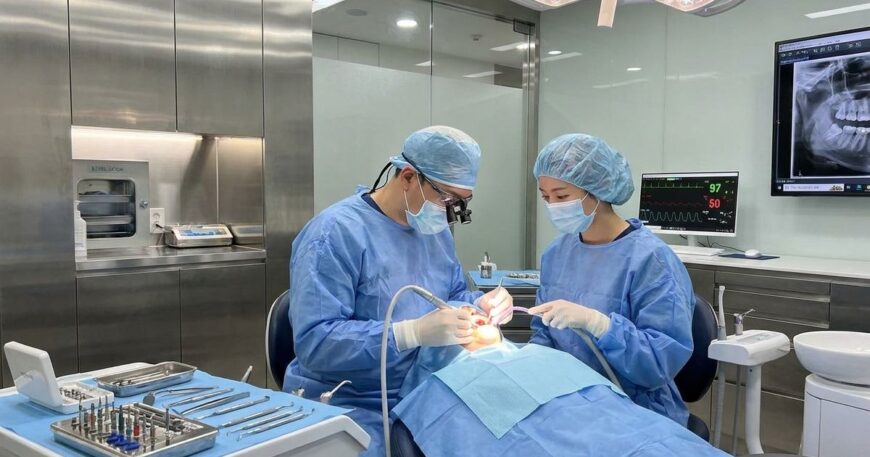
Advanced Surgical Techniques for Dental Health in Modesto

Most people don’t think about oral surgery until they’re already in pain. A cracked tooth that’s beyond saving, a wisdom tooth that’s been quietly causing problems for months, a gap where a tooth used to be. By the time someone ends up in a surgical consult, they usually want two things, to understand what’s actually going to happen and to know whether it’s going to be as bad as they’re imagining. The answer to that second question, more often than not, is no. Not even close.
Oral surgery in Modesto has moved a long way from what it looked like even ten or fifteen years ago. The equipment is better. The planning is more precise. And the techniques surgeons use today are designed to touch as little healthy tissue as possible, which is the single biggest factor in how fast patients recover. That’s worth understanding before you walk into any consultation.
What Makes a Surgical Technique “Advanced” in the First Place
Here’s something worth saying upfront, the word “advanced” gets thrown around in dental marketing constantly, and most of the time it means nothing. So let’s be specific about what it actually refers to.
The biggest shift in modern oral surgery isn’t any single procedure. It’s imaging. When a surgeon can look at a full three-dimensional scan of your jaw before the procedure starts, seeing exactly where your nerve canals run, how dense the bone is in different spots, how close the sinus floor sits to where an implant needs to go, the entire surgery becomes more predictable. Less guesswork means less collateral damage to surrounding tissue. Less tissue damage means faster healing and lower infection risk.
Beyond imaging, guided surgical tools let surgeons place implants through templates that were designed specifically for your jaw anatomy. The implant goes exactly where the plan says it should. Not approximately. Exactly. That kind of precision used to require opening up a much larger surgical site. Now it often doesn’t.
So when a practice says it uses advanced techniques, the questions worth asking are: Do you have cone-beam CT imaging in-house? Do you use surgical guides for implant placement? Those answers tell you more than any tagline.
Why Patients in Modesto Are Choosing Surgery Sooner, Not Later
There’s a real shift happening. People who used to delay dental surgery for years, sometimes because of cost, sometimes anxiety, sometimes just avoidance, are coming in earlier. Part of that is awareness. Part of it is that the procedures genuinely aren’t as rough to get through as they used to be.
Recovery from a bone graft or a single implant placement used to mean a week off work, significant swelling, and a level of discomfort that people remembered for years. Today, a lot of patients are back to their normal routine in two or three days. Not because the surgery got simpler, but because minimally invasive techniques preserve more tissue, and preserved tissue heals faster. It’s not complicated logic, it just took a while for the tools to catch up with the idea.
There’s also the sedation piece. For patients with dental anxiety, and there are a lot of them, IV sedation has changed the calculus entirely. Most patients under IV sedation have almost no memory of the procedure. They sit down, and then it’s over. That psychological shift matters. When surgery stops feeling like something to dread and starts feeling like something you just get through, people stop putting it off.
The Procedures That Actually Come Up Most Often
Hughson Dental Implants handles a wide range of surgical cases, and so do several other practices across Modesto and the surrounding area. But a handful of procedures come up again and again, and understanding what they actually involve makes the whole process a lot less intimidating.
Dental implant placement is the one most people have heard of. A titanium post goes into the jawbone where a tooth root used to be. Over the following months, the bone grows around it, a process called osseointegration, and it becomes a fixed, permanent anchor for a crown. The surgery itself usually takes under an hour for a single implant. What takes time is the healing phase before the final restoration goes on.
Bone grafting is something a lot of patients don’t hear about until they’re already in a consult, and it catches them off guard. The jaw needs the stimulation of a tooth root to stay dense. When a tooth has been missing for a year or more, the bone in that area often starts to shrink. A graft rebuilds it, using donor material or synthetic substitutes that your body eventually replaces with real bone. It’s a prerequisite for implants in a lot of cases, and patients who go in understanding that tend to feel less blindsided by the treatment timeline.
Sinus lifts are a variation on grafting specific to the upper back jaw. The maxillary sinuses, air-filled spaces above your upper molars, sometimes sit very low, leaving barely any bone between them and the surface where an implant needs to go. A sinus lift gently raises that sinus floor and packs bone material beneath it. Sounds more invasive than it actually feels for most patients.
Surgical wisdom tooth removal varies enormously depending on how impacted the tooth is. Fully erupted wisdom teeth sometimes come out almost as simply as any other extraction. Teeth that are still mostly under the gum or lying at an angle, those take actual surgery. An incision, sometimes sectioning the tooth into pieces to work it out, then closing the site. Recovery is generally a few days of real soreness, then a gradual return to normal.
All-on-4 deserves its own mention because it genuinely changed what full-arch tooth loss treatment looks like. Four implants, placed at calculated angles, support a complete set of fixed teeth for an entire arch. The angled placement lets surgeons work with denser bone regions and often skips the need for grafting entirely. In many cases, patients receive a functional temporary set of teeth on the same day. The final permanent restoration comes later, but walking out of surgery with teeth? That wasn’t common practice until relatively recently.
LANAP laser gum surgery is specifically for advanced periodontal disease. Traditional treatment, flap surgery, required cutting the gum open, peeling it back, and manually debriding infected root surfaces. LANAP does the equivalent with a laser that targets only diseased tissue. Healthy tissue stays intact. There are no incisions, usually no sutures. Patients who’ve experienced both consistently say recovery from LANAP is incomparably easier.
Sedation: It’s More Flexible Than Most People Realize
A surprising number of patients assume their only options are “local anesthetic only” or being fully put under. There’s actually a wider range than that, and which option makes sense depends on both the procedure and the patient.
Nitrous oxide, laughing gas, is light. You stay awake, you stay responsive, you just feel calm. It metabolizes fast enough that you can usually drive yourself home after. For patients with mild anxiety or shorter procedures, it’s often enough.
IV sedation is different. It hits faster and goes deeper. Most patients are in a kind of twilight, not unconscious in the way general anesthesia works, but deeply relaxed and largely unaware of what’s happening. Memory of the procedure is usually minimal to none. For longer surgeries, multiple extractions, or patients with significant anxiety, it changes the experience completely.
There are also moderate oral sedation options, pills taken before the appointment, that fall somewhere between the two. A lot of practices use these for patients who want more relaxation than nitrous provides but don’t need IV sedation.
The point is, the assumption that surgery means suffering through discomfort and anxiety isn’t accurate anymore. If you’ve avoided treatment because of how you expect it to feel, it’s worth having an actual conversation with a surgeon about what sedation options apply to your situation.
How Recovery Actually Goes, The Honest Version
The standard recovery advice, soft foods, no straws, take your medication, rest, is all correct. But it skips over the part that most patients actually want to know: what does it feel like day by day?
Day one is usually fine because you’re still numbed up and, if you had sedation, running on residual calm. Day two and three are typically the worst. That’s when swelling peaks. Soreness is at its highest. Eating anything that requires chewing feels difficult. This is also when a lot of patients panic and think something went wrong, but in most cases, that’s just the normal healing process doing its thing.
By day four or five, most people notice a clear turn. Swelling starts going down. The soreness is still there but more manageable. By the end of the first week, the majority of patients are back to most of their normal activities. Desk work, yes. Hard physical labor, probably not yet.
The one thing that actually changes recovery outcomes more than anything else is following the aftercare instructions closely. Not rinsing too aggressively, not smoking, not using straws for the first few days, these aren’t suggestions, they’re what protects the clot that forms in the surgical site. Disturb that clot and you end up with dry socket, which is a separate, significantly more painful problem. It’s avoidable. Most people who get it knew they were pushing their luck.
And if something feels genuinely wrong during recovery, worsening pain after day three, a fever, swelling that’s spreading rather than shrinking, call the office. Don’t wait. It’s almost always nothing, but “almost always” isn’t “always.”
Choosing Where to Have Surgery in Modesto
There are real differences between practices, and it matters more for surgery than it does for a cleaning or a filling. The questions that actually tell you something useful: Does the practice have its own 3D imaging equipment, or do they outsource that to a radiology center? Does the surgeon have specific, recent experience with the procedure you need, not just general dental experience? Can they handle your full treatment in one location, from initial scans through follow-up?
The last one sounds like a convenience issue, but it’s actually a care quality issue. Continuity matters in surgery. When the same team that planned your procedure also performs it and sees you for follow-ups, they catch things that get missed in handoffs between providers.
Modesto has good options. The right practice for you is one where you can ask those questions directly and get direct answers, not reassurances, not brochure language. A surgeon who’s confident in their experience will tell you what they’ve done, how often they do it, and what your specific risks and recovery look like. That kind of conversation, before you commit to anything, is worth more than any amount of website reviews.
