
Gout vs Bunion: How Are They Different?

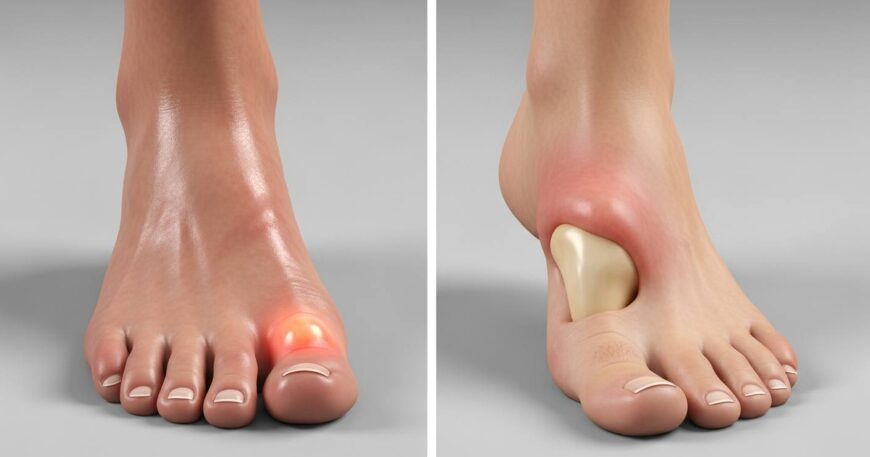
Both gout and bunions can cause pain, swelling and redness at the base of your big toe – but they are very different problems. Gout is an inflammatory arthritis caused by uric acid crystals in the joint, leading to sudden, intense attacks of pain and swelling. A bunion (hallux valgus) is a structural foot deformity: it’s a bony bump that slowly forms on the big toe joint as the toe angles inward. In plain terms: gout feels like your toe is on fire, while a bunion feels like a hard bump pressing on your toe.
-
Onset: Gout hits suddenly – often overnight – with severe pain. A bunion develops gradually, growing and aching over months or years.
-
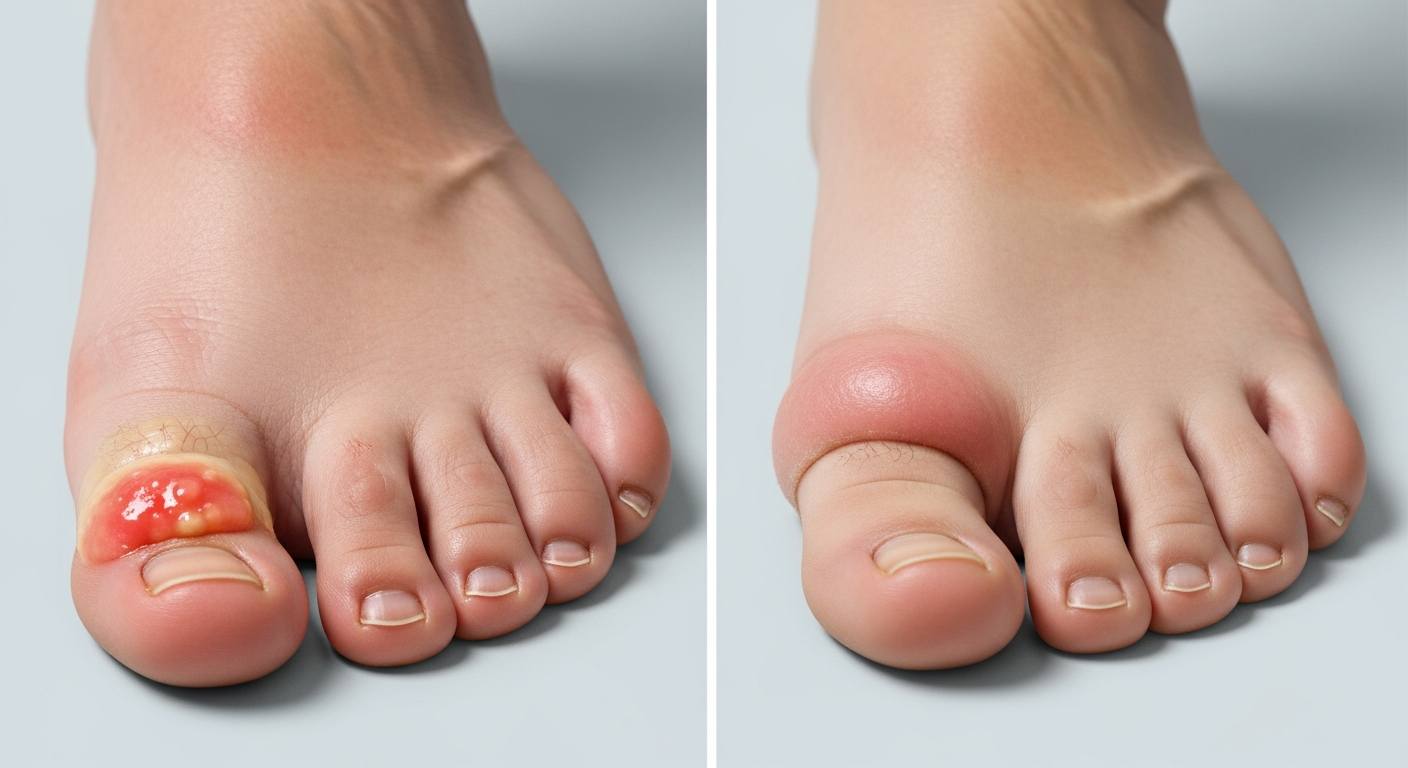
Appearance: A gout attack makes the joint very red, hot, and swollen; even a bedsheet touch can hurt. A bunion appears as a visible bump on the side of the big toe base, often with corns or calluses from toes rubbing.
-
Cause: Gout is caused by excess uric acid in the blood, which forms needle-shaped crystals in the joint. Bunions result from foot-bone misalignment – often due to inherited foot shape or long-term pressure (like wearing tight, narrow shoes) pushing the big toe out of place.
-
Treatment: Gout is treated with medication and diet changes – for example, anti-inflammatories for flares and drugs like allopurinol to lower uric acid. Bunions are managed by shoe changes (wide toe boxes), padding or orthotic devices, and sometimes surgery if needed.
Symptoms: How They Feel Different
Gout and bunions both affect the big toe joint, but their symptoms have key differences. Gout’s hallmark is sudden, excruciating pain. During a gout attack, your big toe joint usually becomes extremely tender, swollen, and bright red or purple. You may wake up at night with intense throbbing pain, feeling like your toe is “on fire”. The pain peaks within hours and then subsides over days, but often comes back if not treated.
By contrast, a bunion causes a duller, chronic ache and pressure. You’ll see or feel a firm bump on the inner side of your big toe joint. This bump (the bunion) tends to rub against your shoes, causing soreness, redness or calluses over time. The joint may become stiff, especially in the morning or after wearing tight shoes. Unlike gout, bunion pain usually worsens gradually as the deformity grows; it does not come and go in sharp attacks. In short, if your pain is sudden and extreme, think gout; if you have a long-standing bump and ache, think bunion.
Causes and Risk Factors
The underlying causes of gout and bunions are completely different:
-
Gout is caused by high uric acid levels. When your body breaks down purines (found in red meat, seafood, alcohol, and sugary drinks), it produces uric acid. Normally it dissolves in blood and passes in urine, but excess levels can form needle-like urate crystals in joints. These crystals trigger the sharp inflammatory attacks of gout. Risk factors for gout include obesity, heavy alcohol use, diets high in purines, high blood pressure, kidney problems, and certain medications. Men (especially middle-aged) are much more likely to get gout than women.
-
Bunions result from mechanical pressure and bone alignment issues. A bunion is a deformity where the bones at the big toe’s base shift out of place, forcing the toe inward and the joint outward. This misalignment often has a hereditary component: over 70% of people with bunions have a family history of them. Other contributors include flat feet, joint laxity, or arthritis. Chronic pressure on the toe joint – for example from tight, pointed or high-heeled shoes – can speed up bunion formation. Bunions are more common in women (due to footwear and foot shape) and typically develop slowly over years.
How They’re Diagnosed
Because gout and bunions can both cause toe pain, proper diagnosis is key.
-
For gout, a doctor will usually check the joint during a flare and may order lab tests. They might perform a blood test for uric acid, though normal levels don’t rule it out. The definitive test is joint fluid analysis: the doctor withdraws a bit of fluid from the painful joint and looks for urate crystals under a microscope. Imaging (X-rays or ultrasound) can show joint damage or crystal deposits in advanced cases.
-
For a bunion, diagnosis is mostly by physical exam. Your foot doctor will look at the big toe position and feel the bump. They may move the toe to check its range of motion. X-rays of the foot are often taken to assess the toe’s alignment and rule out other issues. No special blood tests are needed for an uncomplicated bunion.
If you’re not sure which one you have, a visit to a healthcare provider can clarify. Both Verywell and Healthline emphasize seeing a doctor if you have persistent big-toe swelling or a bump.
Treatment and Management
Gout treatment focuses on stopping the attack and preventing future flares:
-
During an attack: Take an NSAID (like ibuprofen or naproxen) to reduce pain and inflammation. If NSAIDs aren’t enough, doctors might prescribe colchicine or a short course of steroids. Resting and elevating your foot, using ice packs, and drinking water also help ease the symptoms.
-
Preventing flares: Long-term, physicians often prescribe medications to lower uric acid (e.g. allopurinol or febuxostat) if you have frequent attacks or topchi. You’ll be advised on diet and lifestyle: lose weight if overweight, drink less alcohol, avoid high-purine foods (like red meat and shellfish), and stay hydrated. Following these steps can drastically reduce gout episodes.
Bunion treatment aims to relieve pressure on the toe and slow deformity:
-
Conservative care: Always start with better footwear – shoes with a wide, deep toe box and low heels. You can use bunion pads or cushions (worn in the shoe) to ease rubbing on the bump. Custom or over-the-counter orthotic insoles help distribute pressure evenly. Icing the area can reduce soreness if inflamed. NSAIDs (ibuprofen, naproxen, or acetaminophen) can ease chronic pain. Gentle toe exercises or toe-stretching tape may maintain motion.
-
Surgery: If non-surgical measures fail and the bunion causes severe pain or mobility issues, a podiatrist may recommend a bunionectomy. In surgery, the bone is realigned and extra bony tissue is removed. Recovery can take weeks, but surgery permanently corrects the joint position. (Most people opt for surgery only after exhausting conservative options.)
When to See a Doctor
If you experience sudden, intense toe pain and swelling, seek medical care promptly: that’s likely a gout flare, which a doctor can confirm and treat to prevent joint damage. If you notice a gradually growing bump on your toe with aching pain or shoe problems, you should see a podiatrist. Even though bunions aren’t an emergency, early intervention (better shoes, padding, exercises) can slow progression.
Remember: only a professional can be sure. Studies show that people often mistake gout for a bunion or vice versa, so don’t self-diagnose. A doctor will distinguish them using the tests above, then recommend the right treatment. Untreated gout can lead to more frequent attacks and joint damage, and untreated bunions will continue to worsen as the toe drifts.
Key Takeaways
-
Gout is sudden arthritis in the big toe joint from uric acid crystals; it causes fiery, intermittent attacks of pain, redness and swelling.
-
Bunion is a slow-developing deformity where the big toe angles toward the second toe, creating a bony bump. Its symptoms are a chronic ache, stiffness and a visible bump that worsens over time.
-
Causes differ: Gout comes from metabolic issues (diet, genetics, kidney), bunions come from foot structure and pressure (genes, shoes).
-
Diagnosis: Gout often needs blood or joint-fluid tests; bunions are found by exam and X-ray.
-
Treatment: Gout is managed with medication (NSAIDs, colchicine, allopurinol) and lifestyle changes. Bunions are managed with shoes, padding, orthotics, and possibly surgery.
In summary, while gout and bunions may feel similar at a glance, they are fundamentally different. Understanding these differences helps you get the right care. If in doubt, consult a healthcare provider to confirm whether it’s gout or a bunion (or something else) – that way you can address the real cause and get relief.
