
Two Conditions Often Misdiagnosed as Carpal Tunnel Syndrome

Carpal tunnel syndrome (CTS) causes wrist pain, numbness and tingling by compressing the median nerve in the wrist. However, some other problems can mimic these symptoms, leading doctors and patients astray. In fact, cervical radiculopathy (a pinched nerve in the neck) and arthritis (especially rheumatoid arthritis in the wrist) are two of the most common culprits. Both can produce hand numbness, weakness or tingling that looks like CTS, but the source of the problem is different. (For completeness, medical guides also warn that tendonitis in the wrist is a frequent “look-alike” – more on that below.) The key is knowing how to spot the differences so you get the right diagnosis and treatment.
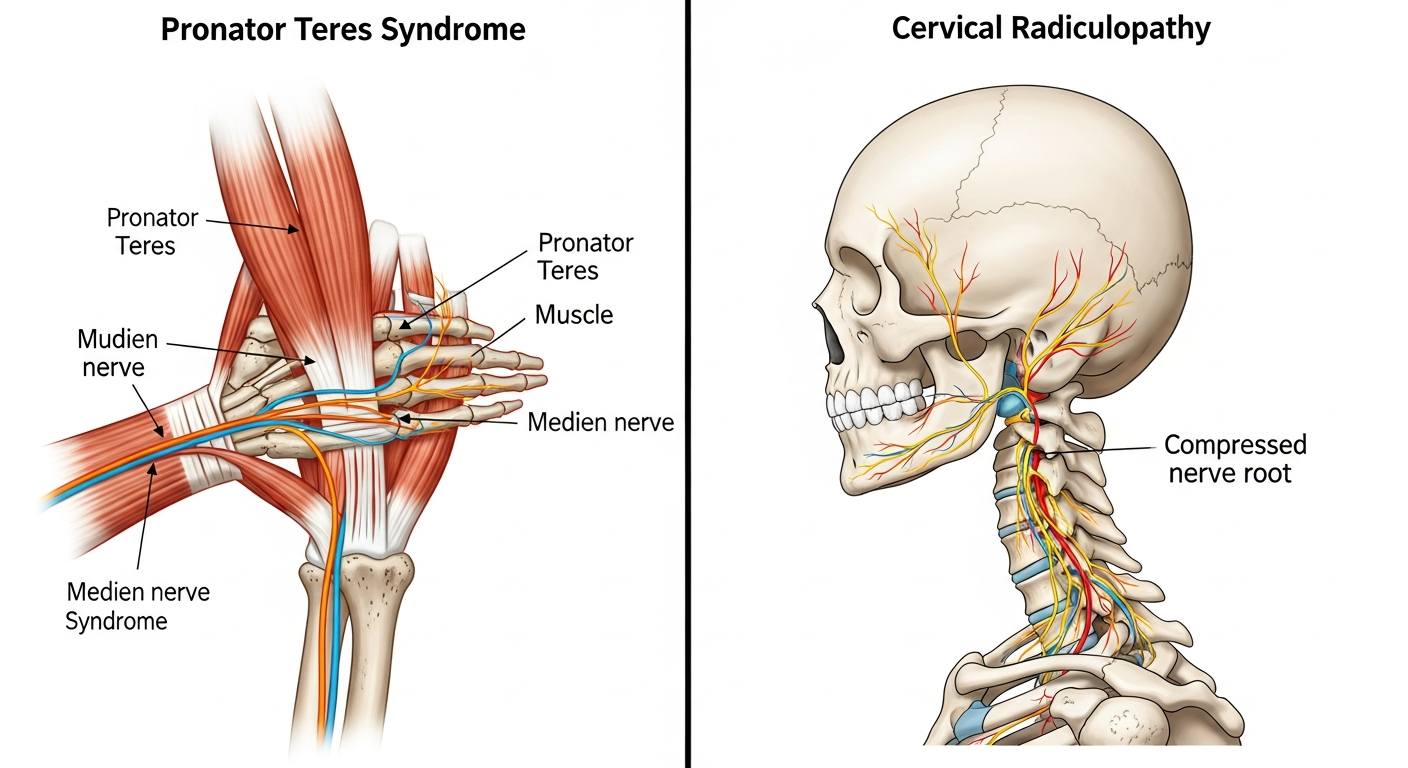
Imagine this: if a slipped disc or bone spur in your neck presses on a nerve root, it can send pain and tingling all the way down your arm into your hand. This is cervical radiculopathy. Its symptoms often mimic CTS because you feel numbness in your hand. But unlike CTS – which is just at the wrist – radiculopathy involves the neck and shoulder too. For example, one hand surgeon explains that cervical radiculopathy “can produce pain, tingling, or numbness that extends into the hand”, and is commonly mistaken for CTS. The most important clue: if your hand symptoms come with neck stiffness or shoulder pain, think neck. In radiculopathy the origin of trouble is the spine, whereas CTS is purely at the wrist. In practice, a doctor may even perform tests like having you turn or tilt your head (Spurling’s test) to see if neck movement triggers your arm symptoms.
-
Location of symptoms: CTS symptoms occur only in the hand and wrist (typically the thumb, index, middle and half of the ring finger), whereas cervical radiculopathy often causes pain or numbness that radiates from the neck into the entire arm. For instance, pain or weakness may be felt in the shoulder, elbow or even forearm, not just the fingers. A key sign is neck discomfort or stiffness that accompanies the hand numbness. In other words, if only your hands hurt, it’s more likely true CTS; if your neck and arm hurt too, consider a pinched nerve in the neck.
-
Nerve pattern: CTS is due to pressure on the median nerve at the wrist, so it mostly affects the “first three and a half” fingers on the palm side. Radiculopathy, however, depends on which spinal nerve is pinched. For example, a C6–C7 disc herniation often causes numbness in the middle finger, while other nerve roots affect different finger patterns or even the pinky. Thus, radiculopathy symptoms may include the small finger or spread differently than CTS.
-
Other symptoms: Radiculopathy can cause neck pain, shoulder ache, muscle spasms or even reflex changes in the arm – things CTS never does. Also, CTS often wakes you at night or feels worse with prolonged wrist use, whereas radiculopathy pain might be triggered by specific neck movements or posture.
In contrast, rheumatoid arthritis (RA) is an inflammatory disease of the joints that often targets the hands and wrists. Early RA in the wrist can feel a lot like CTS: you get wrist pain, weakness, swelling and morning stiffness in your hands. In fact, many doctors note that RA and CTS share symptoms such as hand discomfort, weakness, numbness and tingling. One orthopedic blog explains that RA causes pain in the “larger knuckles and wrist joints,” and patients often notice numbness and stiffness in both hands. CTS patients usually feel numbness along the nerve path, but RA patients feel dull, achy joint pain. Here are the important differences:
-
Multiple joints vs. one tunnel: CTS affects only the carpal tunnel in the wrist, whereas RA can affect many joints (knuckles, wrists, even elbows and feet). You will often feel RA pain and swelling in several joints at once, commonly on both sides of the body. For example, both your left and right hand wrists may be sore and stiff in the morning. By contrast, CTS numbness is usually in one (or one side’s) hand and follows the median nerve.
-
Systemic vs. local: RA is a systemic autoimmune disease. This means you might have general fatigue, low fever or weight loss, especially during flare-ups. CTS does not cause fatigue or fever – its effects are strictly in the hand/wrist area. If you have any “flu-like” or whole-body symptoms along with your hand pain, RA is much more likely than CTS.
-
Symmetry and fingers involved: CTS numbness typically does not involve the little (pinky) finger – that finger is supplied by the ulnar nerve, not the median. In RA, inflammation can hit any finger joint, including the pinky. Also, CTS symptoms often come on gradually in one hand; RA in hands is frequently symmetrical, with both wrists and hands showing morning stiffness at the same time.
-
Inflammation signs: With RA you may see visible swelling, redness or warmth of the wrist joints or finger knuckles. In CTS, the hand usually looks normal (except later in severe cases where muscle wasting can occur). Joint swelling or deformity strongly suggests arthritis, not CTS.
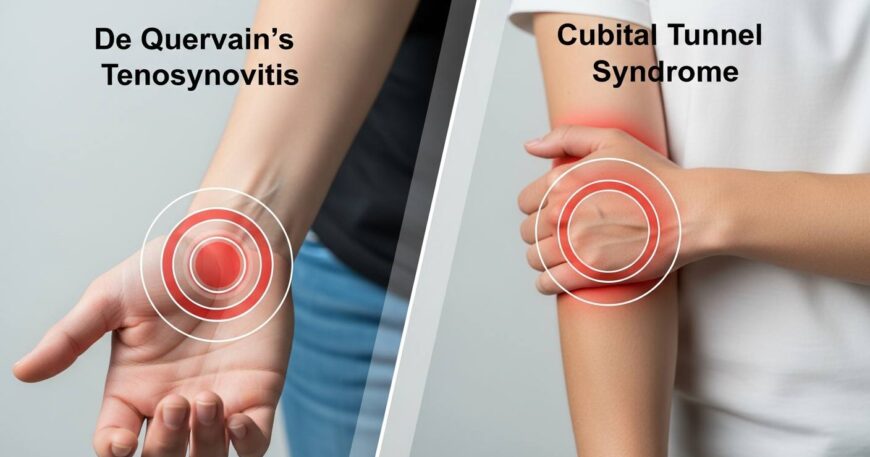
Finally, tendonitis (inflammation of a wrist tendon) is another common mix-up. When tendons in the wrist or palm are overused or injured, they can swell and hurt, and sometimes cause a feeling of numbness or tingling in the hand. Tendonitis pain is usually localized to a specific tendon area – for example, at the base of the thumb (De Quervain’s tendonitis) or along the wrist – and it often worsens when you move or use your hand. By contrast, CTS causes a more diffuse tingling in the fingers and often feels worse at night. Key points:
-
Location of pain: Tendonitis pain is felt right at the tendon (on one side of the wrist or hand) and is aggravated by certain motions. CTS pain or numbness is felt in the fingers and palm and does not change as dramatically with movement.
-
Type of sensation: Tendonitis usually causes aching or sharp pain, not true numbness. You might feel your hand “go to sleep” if pain is severe, but direct pressure on the median nerve isn’t occurring as in CTS. In CTS, tingling or electric-shock feelings in the thumb and first two fingers are more typical.
-
Timing: CTS symptoms often flare at night or after repetitive wrist use, whereas tendonitis pain comes on during or after activity and improves with rest or ice. One physical therapy source notes that both CTS and tendonitis can make gripping hard and cause tingling, but tendonitis is usually just painful and swollen, while CTS produces more numbness and weakness.
In summary, the two big “pretenders” to watch out for are cervical radiculopathy and rheumatoid arthritis (plus remember tendonitis as another mimic). An accurate diagnosis depends on noticing these distinctions. Doctors typically examine which fingers are affected, check for neck or joint problems, and may perform special tests. For CTS, tapping or bending the wrist (Tinel’s or Phalen’s test) can reproduce symptoms, whereas for radiculopathy a neck exam is key, and for arthritis joint exams and blood tests are used. Sometimes nerve conduction studies or imaging (X-rays, MRI) are ordered to be sure. Getting it right matters: as one guide warns, mistaking CTS for another condition can lead to the wrong treatments and prolonged pain.
Conclusion:
If your hand tingling or numbness doesn’t fit the typical CTS pattern – for instance, if it comes with neck/shoulder pain or obvious joint swelling – talk to your doctor about these other possibilities. Cervical radiculopathy (pinched neck nerve) and wrist arthritis can both masquerade as carpal tunnel syndrome. Knowing the difference will help you get the proper care and relief.
