
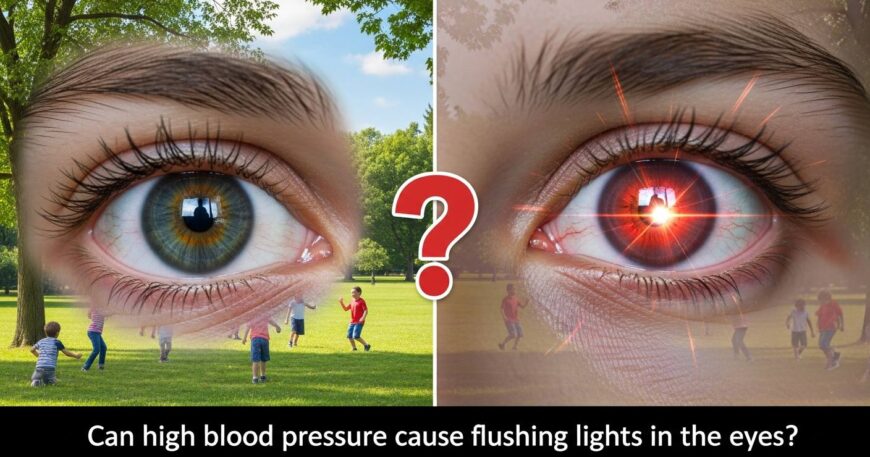
Can High Blood Pressure Cause Flashing Lights in Eyes? A Comprehensive Overview

Yes – high blood pressure can cause you to see flashes of light or sparkles in your vision. This happens because chronic hypertension damages the tiny blood vessels in your retina (the light-sensitive lining at the back of your eye). Doctors call this damage hypertensive retinopathy. When those retinal vessels become narrowed, leaky or stiff, the retina can become irritated or even pull on surrounding tissue. The retina can then send false signals to your brain that look like brief lightning‑streak flashes (a phenomenon called photopsia). In fact, one eye care source notes that patients with high blood pressure “sometimes report seeing flashing lights in their eyes”.
When blood pressure stays high for a long time, the retinal arteries can thicken and narrow, cutting off some of the blood flow to the back of the eye. Your retina needs a steady blood supply to work properly. If that supply is reduced, even tiny changes can trigger flashes. High pressure can also cause tiny leaks or swelling in the retina, which physically stretch or tug on the retina. This tugging is exactly what causes photopsias (flashes): the retina “misfires” as if it had seen a light, even when none is there.
High blood pressure doesn’t just cause flashes. It can blur your vision, cause double vision, or create floaters (specks or threads drifting in your sight). In fact, common eye-related effects of hypertension include:
-
Blurred or hazy vision: Fluid leaks or swelling in the retina can make your sight become fuzzy or unfocused.
-
Double vision: High blood pressure can affect the nerves or muscles in the eyes, causing you to see ghost images of objects.
-
Floaters (spots or strands): These are little shadows from clumps inside the eye that drift across your field of vision. A sudden increase in floaters — especially if you also see flashes of light — is a warning sign of retinal irritation.
-
Flashes of light (photopsias): Bright flickers or lightning-like streaks, often happening in peripheral vision. These occur when the retina is stimulated or pulled.
-
Eye strain, pain or headache: Some people with very high pressure may feel aching around the eyes or get headaches along with vision changes.
All of these symptoms mean your eyes are under stress from high blood pressure. For example, Florida Eye Specialists explain that seeing flashing lights (sometimes miscalled “floaters”) can be a sign that hypertension is damaging the tiny vessels in your eyes. In other words, flashes and floaters in someone with high BP are usually not “just floaters” — they’re a signal that something serious may be happening inside the eye.
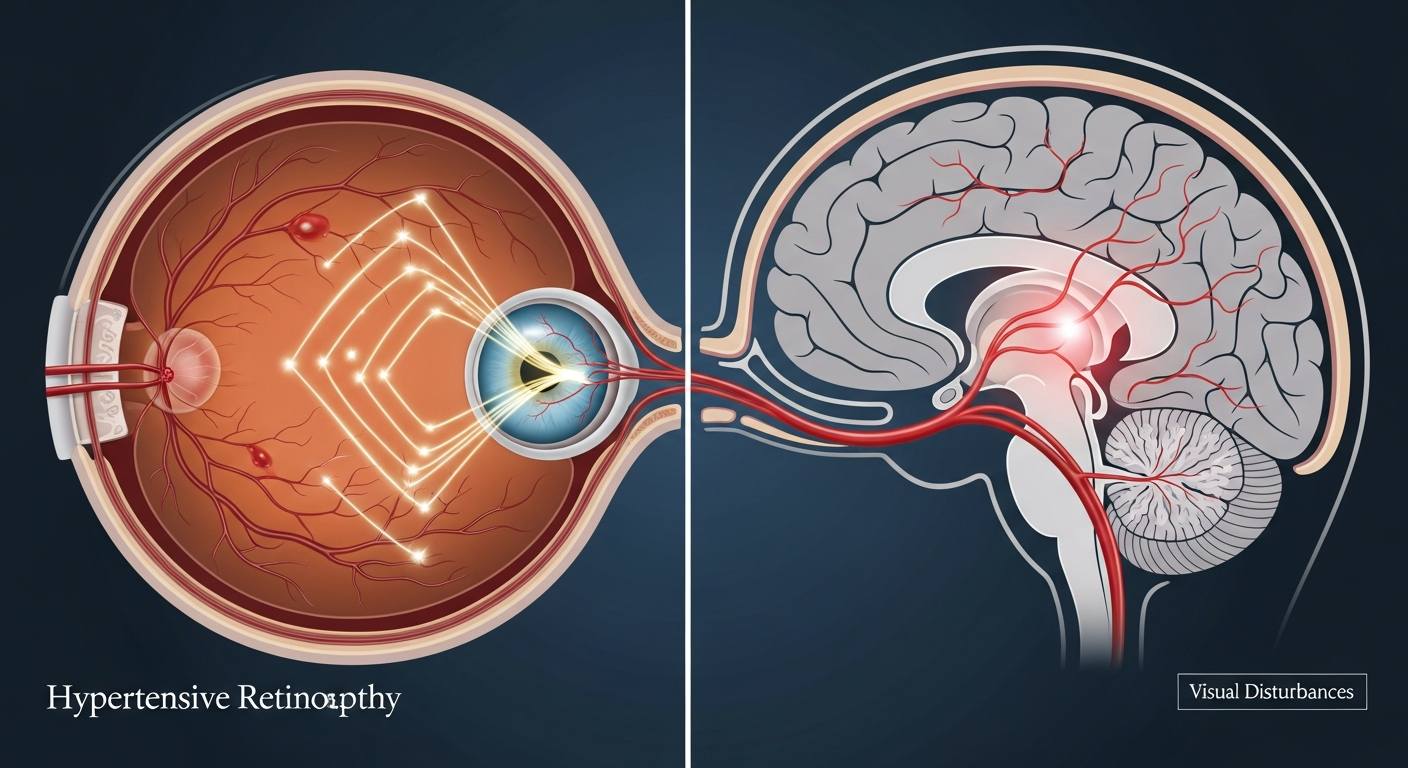
Flashing lights should never be ignored. In severe cases, very high blood pressure can even pull the retina partially away from the back of the eye. (This is called retinal detachment, and it’s an emergency.) Retina specialists note that chronic hypertension “can exacerbate” a detachment by straining already weakened retinal vessels. The classic warning signs of a detaching retina are sudden flashes of light (often with new floaters) and a dark curtain or shadow creeping over part of your vision. If this happens, immediate treatment is needed to prevent permanent vision loss.
In general, if you have high blood pressure and you notice new flashes or any sudden vision changes, get medical attention right away. In particular, watch for:
-
Persistent flashes or sparks of light, especially if they linger or grow in number.
-
A sudden shower of new floaters (specks or lines) in your vision.
-
Any dark “curtain,” shadow or loss of side (peripheral) vision.
-
Unexplained blurriness, double vision, or severe eye pain.
These are red flags for things like retinal tears or detachment. In fact, an eye care guide warns that “flashes of light… appear suddenly with an increase in floaters” typically signal a serious condition that needs prompt treatment. Remember, eye symptoms with high BP can look like an eye emergency even if you don’t feel any pain. As Florida Eye Specialists put it, any unusual visual disturbance should prompt a quick checkup to rule out trouble.
How can you protect your vision? The key is controlling your blood pressure. Most eye issues from hypertension are preventable if you manage the underlying high BP. Eating a healthy low-salt diet, staying active, and taking your antihypertensive medication can all lower eye risk. For example, Florida doctors note that “most cases” of high blood pressure can be treated by lifestyle changes (diet and exercise) or medication. Likewise, regular eye exams can catch early signs of damage. Eye specialists recommend yearly dilated retinal exams for people with hypertension – this way the doctor can spot things like vessel narrowing, bleeding, or swelling before they cause major vision loss.
In summary, high blood pressure can cause you to see flashing lights – and that is not normal. It means the retina is under stress. If you ever notice flashes, floaters, or other vision changes and you have hypertension, don’t dismiss them. Keeping your blood pressure in a healthy range (with diet, exercise and medication) and having routine eye checks are the best ways to protect your eyes. With good blood pressure control, you can greatly reduce the risk that hypertensive damage will rob you of clear vision.
