
Treatment for Black Triangle Teeth: Best Options to Fill the Gaps

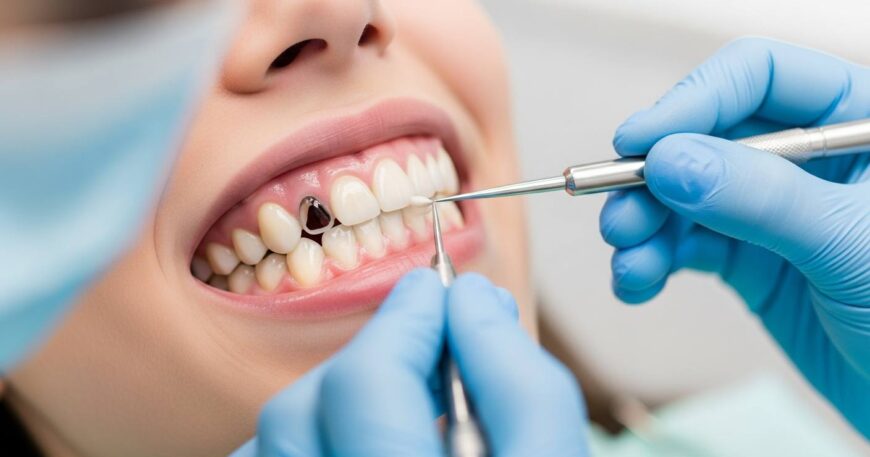
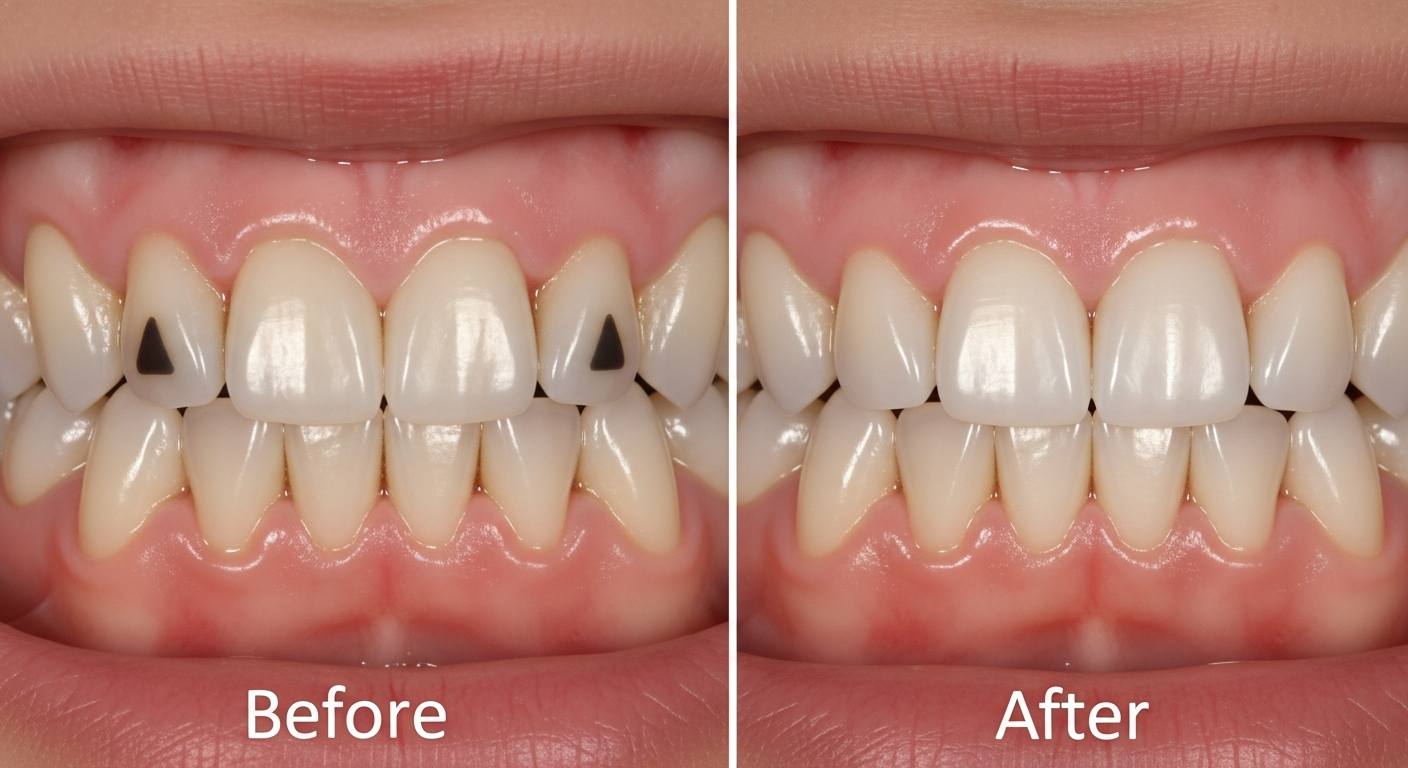
Those small dark triangular gaps between your teeth – called “black triangles” – can usually be corrected. Dentists have several options to close the space and restore your smile. For example, a common approach is to fill the gap with tooth-colored composite bonding, or reshape the tooth with a porcelain veneer or crown. Orthodontic treatments like braces or Invisalign can move teeth closer together, and even gum fillers (hyaluronic acid injections) or grafts can rebuild lost gum tissue. Which method is best depends on why the gap formed (gum recession, bone loss, tooth shape, etc.) and how big the space is. The good news is that in most cases these black triangles can be closed – one dental source notes that “most black triangles can be treated with non-surgical methods like dental bonding or the Bioclear Matrix system”.
Why Do Black Triangles Form?
Black triangles are simply the triangular-shaped spaces that appear between teeth at the gum line. They often happen when the pink gum tissue shrinks or pulls away. For instance, gums can recede from brushing too hard, aging, or untreated gum disease. Bone loss from periodontal disease or other issues can also make these gaps wider. Even orthodontic work (braces) sometimes leaves tiny triangles if the gums don’t fully fill in after the teeth move. In short, any loss of gum or bone between the teeth – or tooth shapes that are naturally narrow at the top – can create a black triangle gap.
Common Treatment Options
Dentists tailor the fix to your situation, but here are the main categories of treatments:
Dental Bonding (Composite Fillings):
A quick and minimally invasive solution is to apply a tooth-colored resin to the teeth adjacent to the gap. The dentist sculpts the composite resin to build out the tooth shape and fill in the black triangle. For example, one practice explains that once any gum disease is treated, “black triangles can be fixed using simple cosmetic dental bonding” – essentially adding resin to close the space. This procedure often takes under an hour per tooth and can usually be done in one visit.
Porcelain Veneers or Crowns:
For larger gaps or when more tooth structure needs correction, the dentist may use porcelain restorations. Veneers are very thin, custom-made porcelain shells bonded to the front of your teeth. They can change the tooth shape to mask the gap. Crowns cover the entire tooth and can also close a gap, but they require more tooth preparation. (In the past, veneers or bonding were often used to cover black triangles, but they involve removing some enamel. Newer methods like Bioclear can sometimes avoid that, see below).
Bioclear Composite Matrix:
A modern alternative to traditional bonding or veneers is the Bioclear (injection molding) technique. In this method, special curved plastic matrices are placed around the teeth. Tooth-colored composite resin is then injected and molded into these forms, closing the black triangle with one seamless piece of material. This approach preserves all of the natural tooth enamel. As one dental clinic describes, Bioclear “preserves the natural tooth enamel while filling the area aesthetically”. In practice it means the dentist can reshape the teeth and press the gum papilla (the little gum between teeth) up against the composite to eliminate the dark space.
Braces or Clear Aligners:
Sometimes the best fix is to move the teeth. Orthodontic treatment (metal braces or clear aligners like Invisalign) can gradually shift crowded or spaced teeth together so that there’s no gap between them. This is especially useful if the black triangle formed because of tooth alignment or spacing rather than just gum loss. For example, one source points out that “orthodontic treatments like braces or clear aligners can close the gaps between teeth” when misalignment is the cause. Often this is combined with some minor enamel reshaping (slendering) of adjacent teeth so they fit together more snugly.
Gum Fillers (Hyaluronic Acid):
For mild to moderate gum recession, dentists can inject hyaluronic acid filler directly into the gum tissue beneath the gap. This plumps the gum papilla and reduces the visible space. According to a periodontist guide, “dermal fillers are an injectable treatment that can help fill the spaces between teeth caused by black triangles”. The procedure is quick (often a few minutes) and results are immediate. Fillers typically last for several months up to a year, making the triangles less noticeable without any cutting or grafting surgery.
Gum Grafting (Surgery):
In more severe cases of tissue loss, a gum specialist might perform a graft to restore the gum line. This involves taking a small piece of tissue (usually from elsewhere in your mouth) and attaching it over the area of gum recession. A well-placed graft can cover exposed roots and reduce the gap. However, it’s a surgical procedure and outcomes can vary. One dental resource notes that while “gum grafting is available as a fix for these triangular shapes,” it “isn’t suitable for all patient groups and may show limited success”. In other words, it can work but is often unpredictable for black triangles alone. Still, in cases of severe gum disease with significant recession, a graft may be recommended to rebuild lost tissue.
Addressing Gum Health and Prevention
Before any cosmetic treatment, underlying gum health should be checked. If periodontal (gum) disease or active infection has caused the recession, your dentist will treat that first – for example with a deep cleaning. As one clinic warns, “if your black triangles have formed as a result of gum disease, it is imperative that you receive proper treatment to stop the infection”. Once the cause is under control, then cosmetic fixes (bonding, veneers, etc.) can safely be applied.
To help prevent new black triangles, gentle oral hygiene is key. Use a soft-bristle toothbrush and avoid scrubbing too hard. Floss daily carefully (following ADA guidelines) so you clean between teeth without injuring the gums. Regular dental check-ups and cleanings will catch any early gum problems. Healthy gums have a thicker papilla that better fills the space; poor gum health is what creates those gaps in the first place.
Consulting Your Dentist
The first step when you notice black triangles is to see your dentist. They will examine your teeth and gums, determine the main cause, and explain your options. Often a single treatment (like composite bonding) can produce an immediate smile improvement. In other cases, a short orthodontic course or a couple of bonding appointments may be needed.
In any case, modern dentistry offers reliable fixes. Composite bonding and Bioclear injections can usually be done in one visit, while veneers or braces take a bit more time. Most importantly, once any gum issues are under control, these treatments can give a natural-looking result. As one patient guide summarizes, with the right approach “these gaps can be closed” and you can again “smile freely”.
